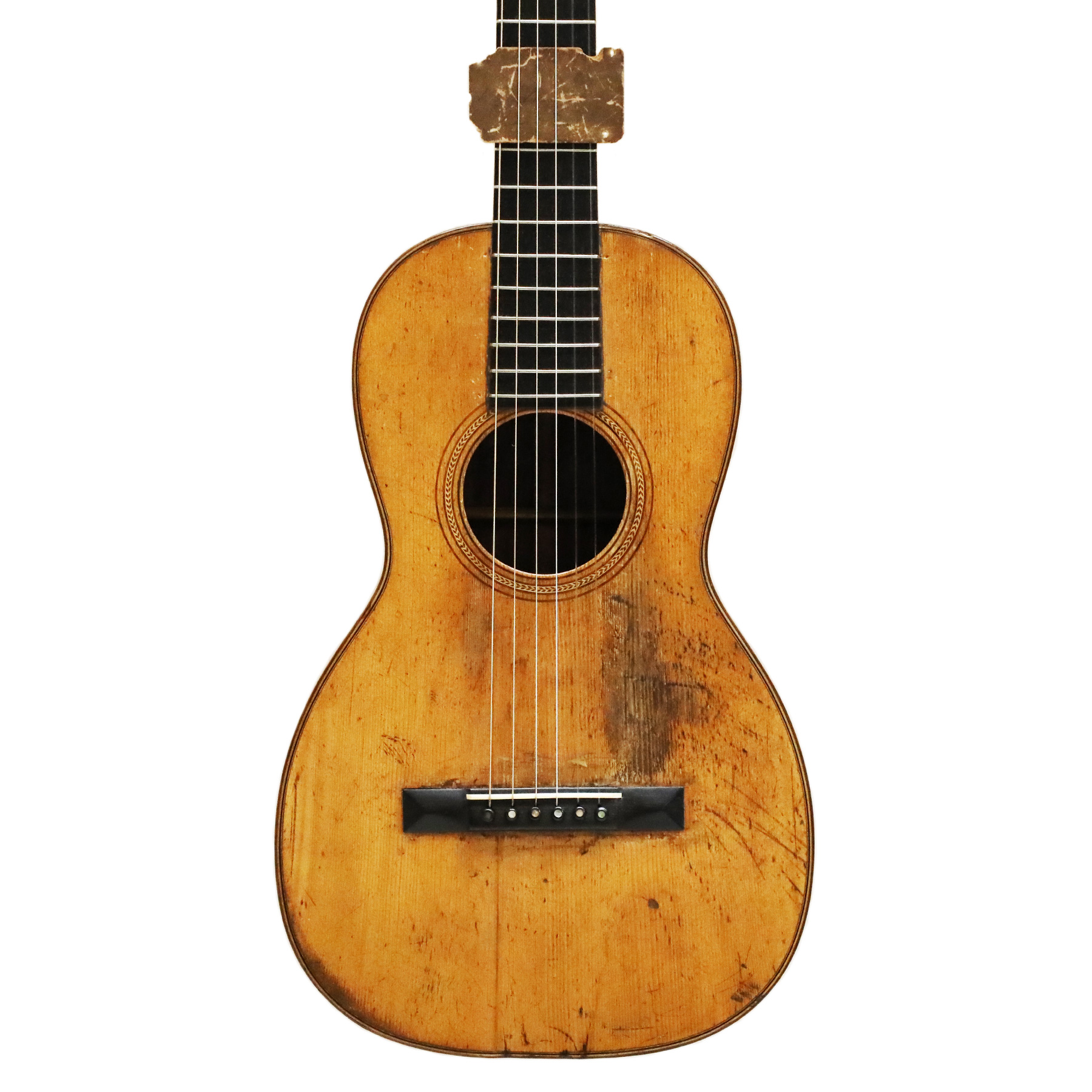
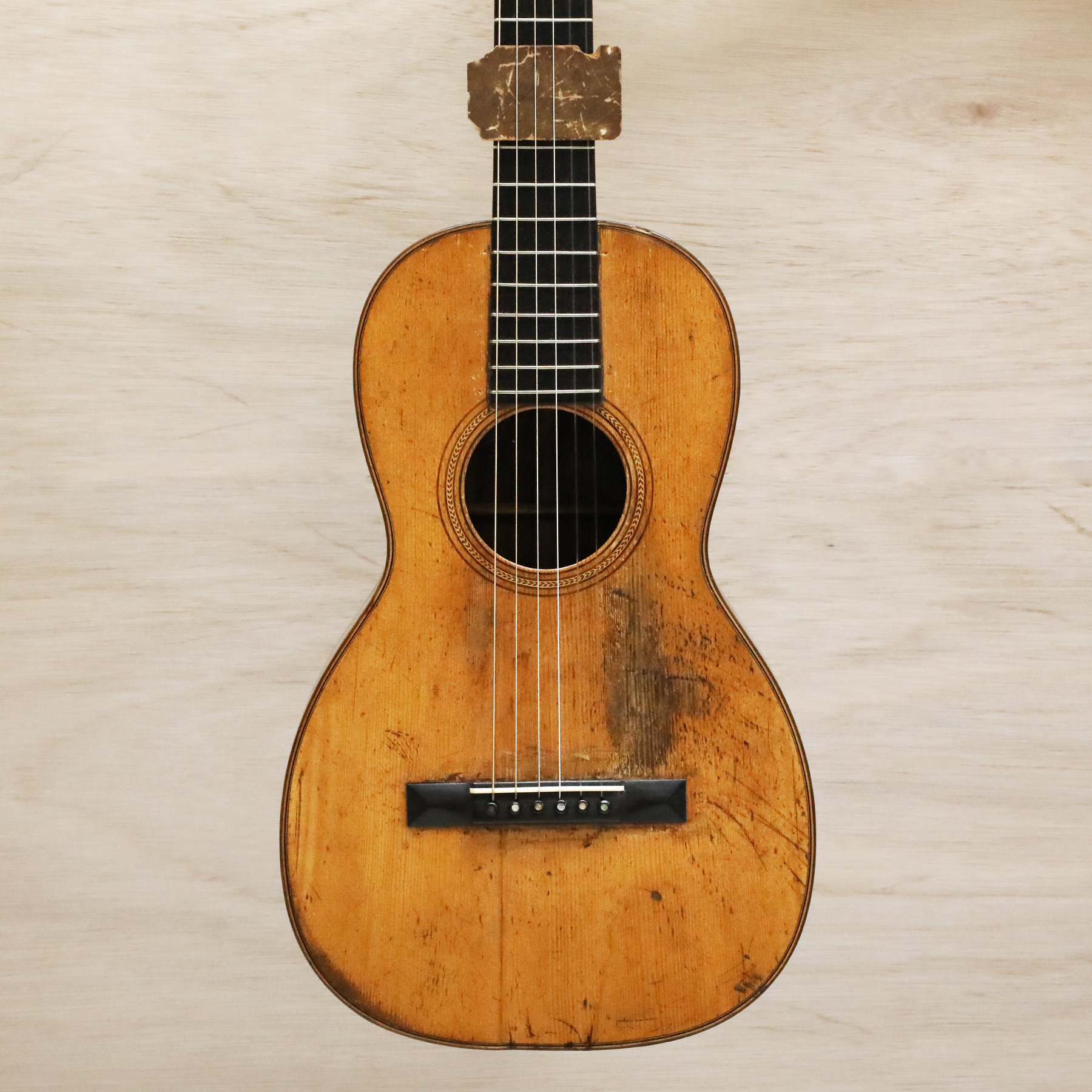
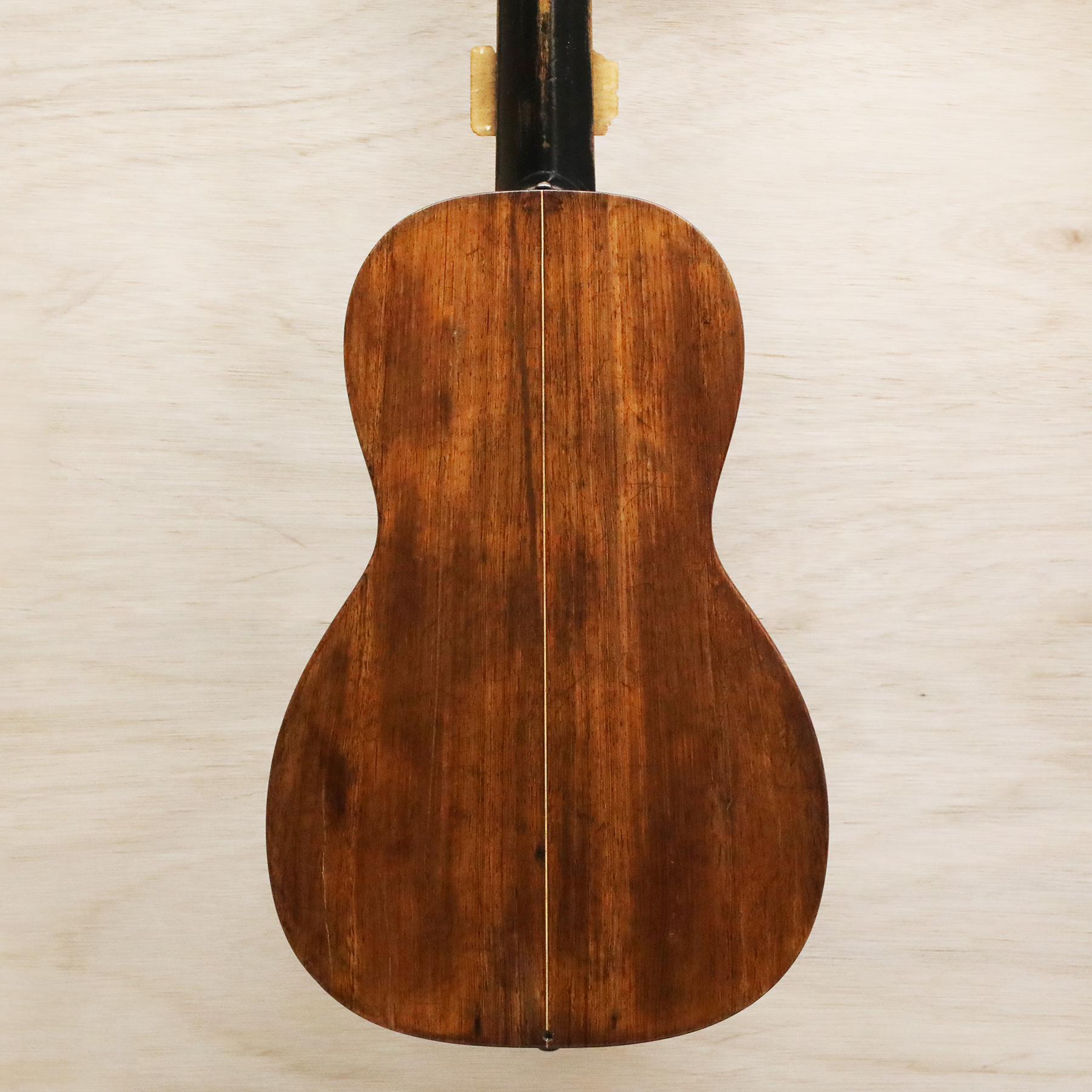
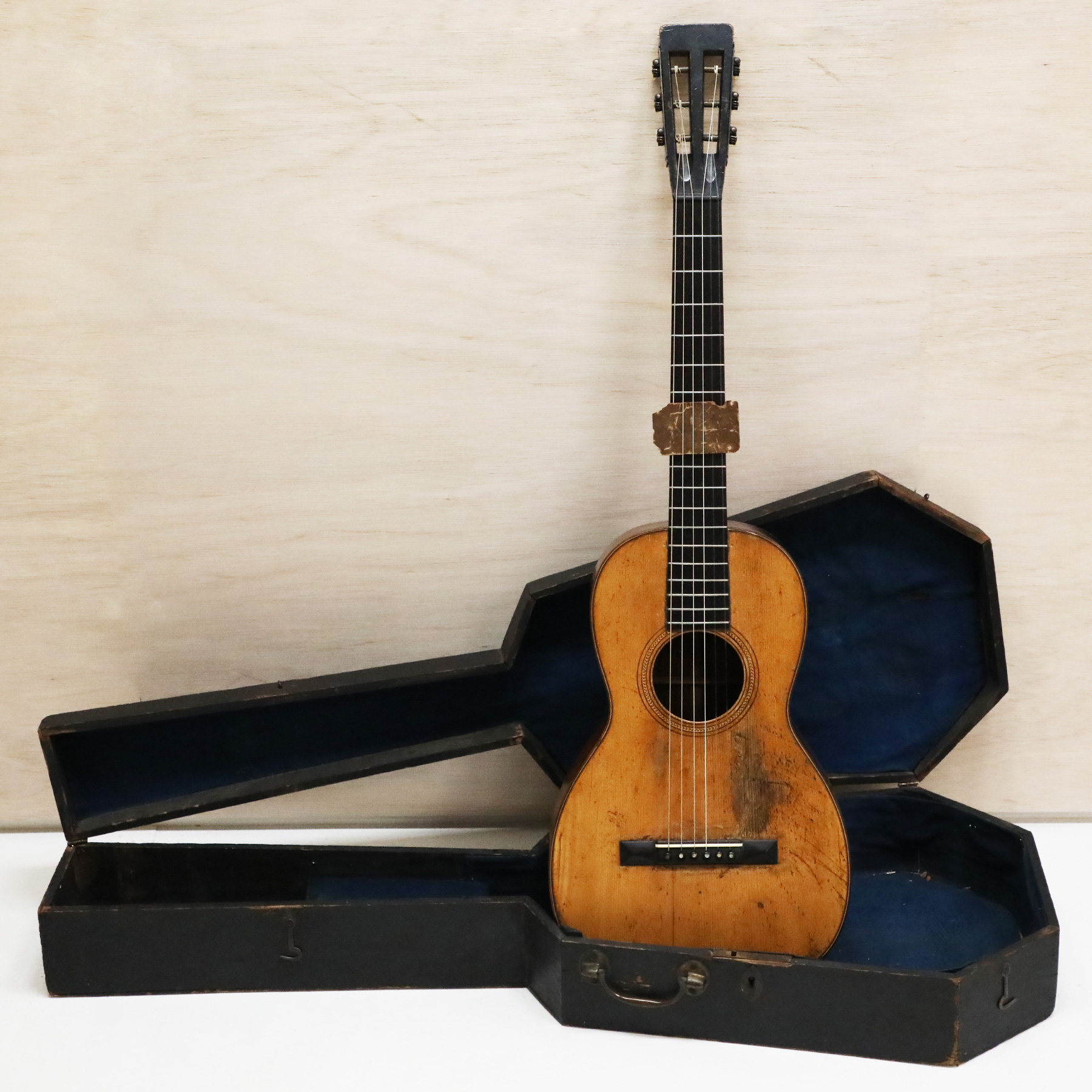
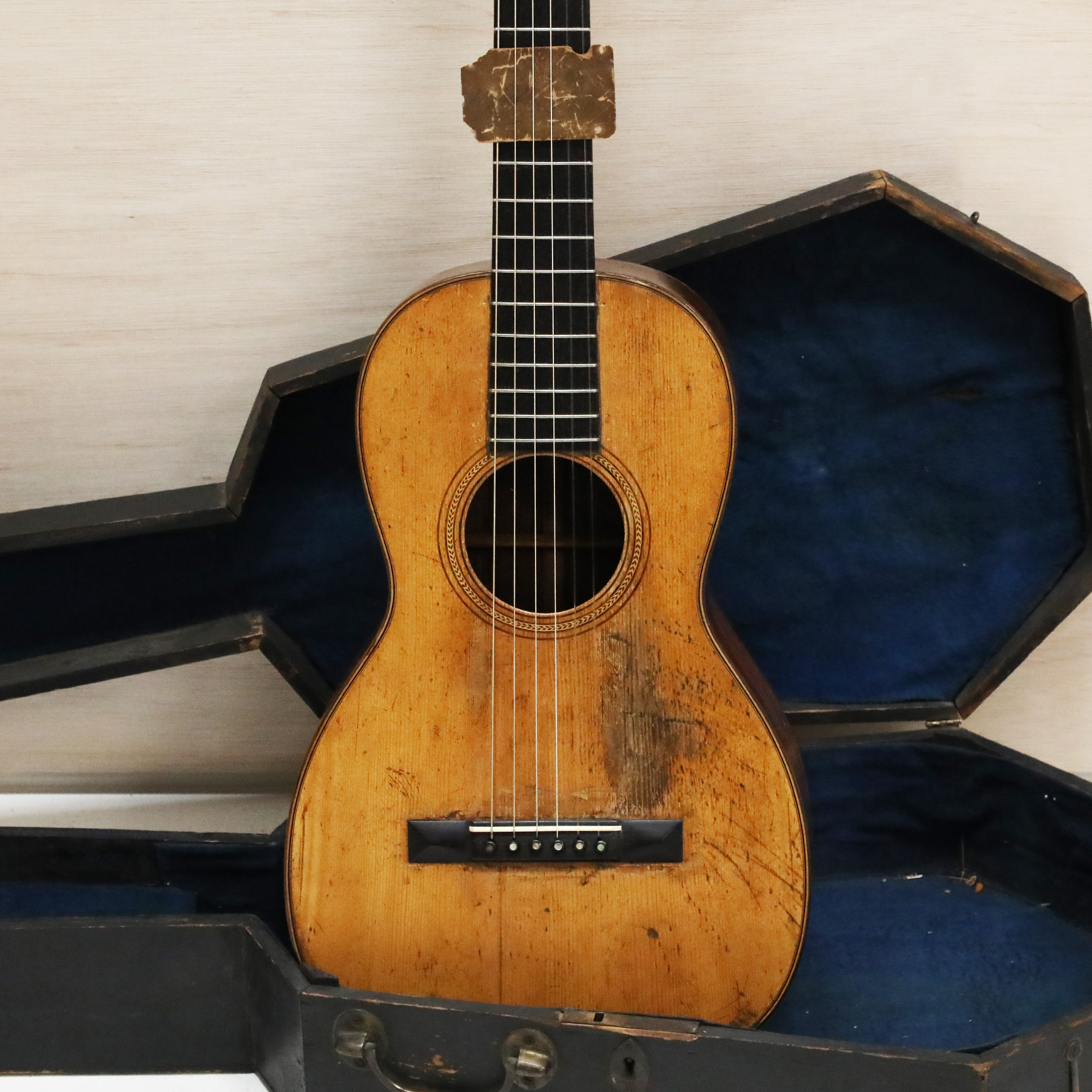
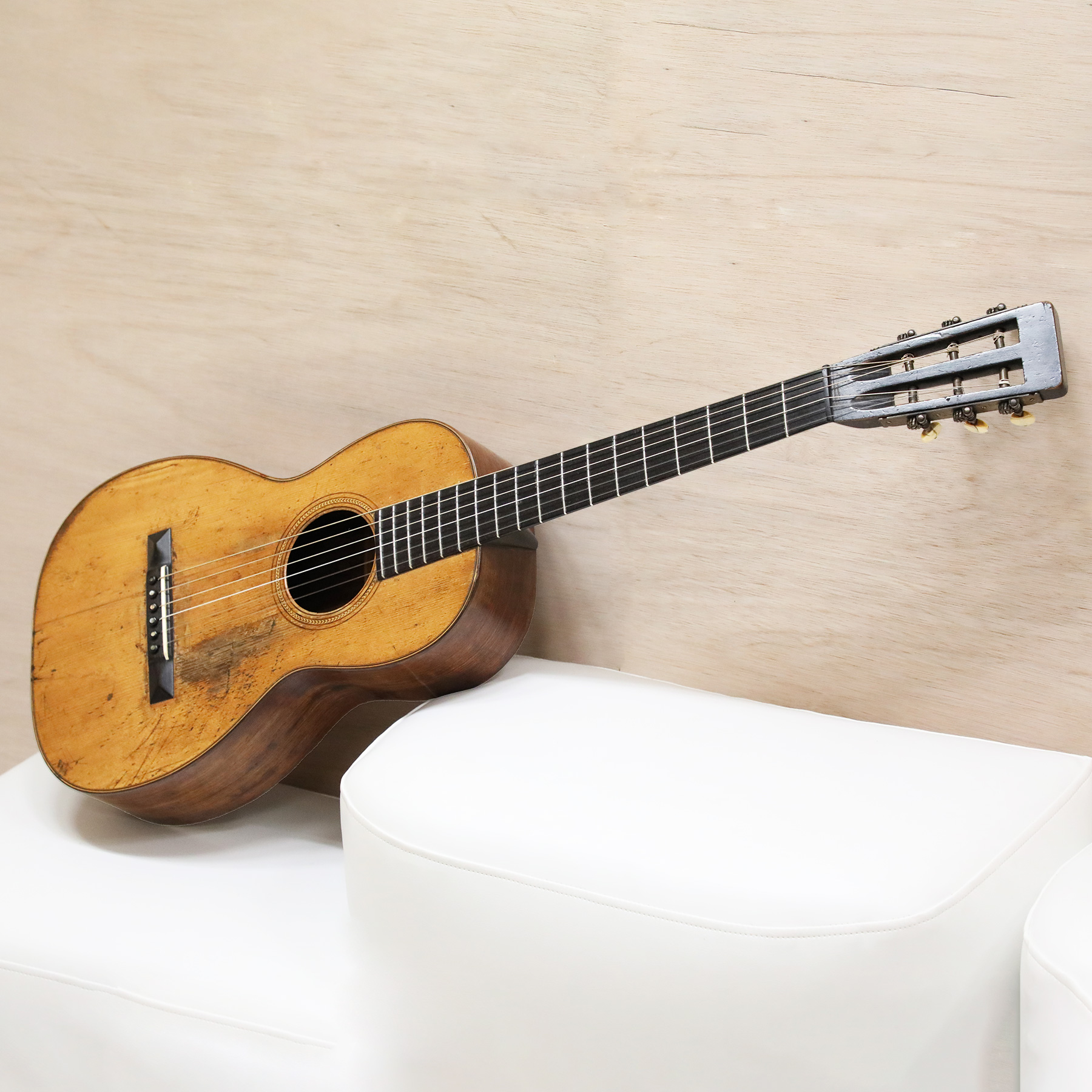
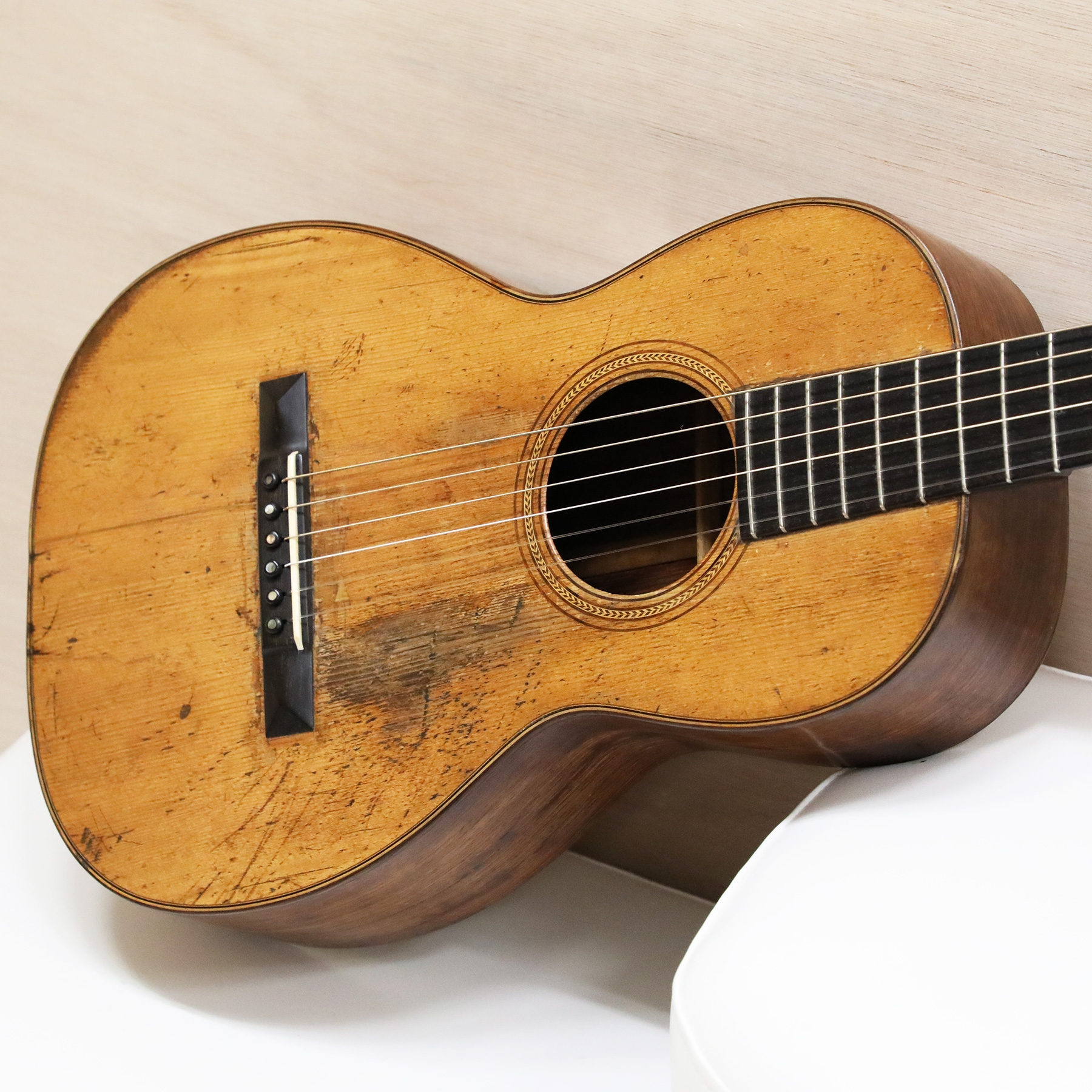
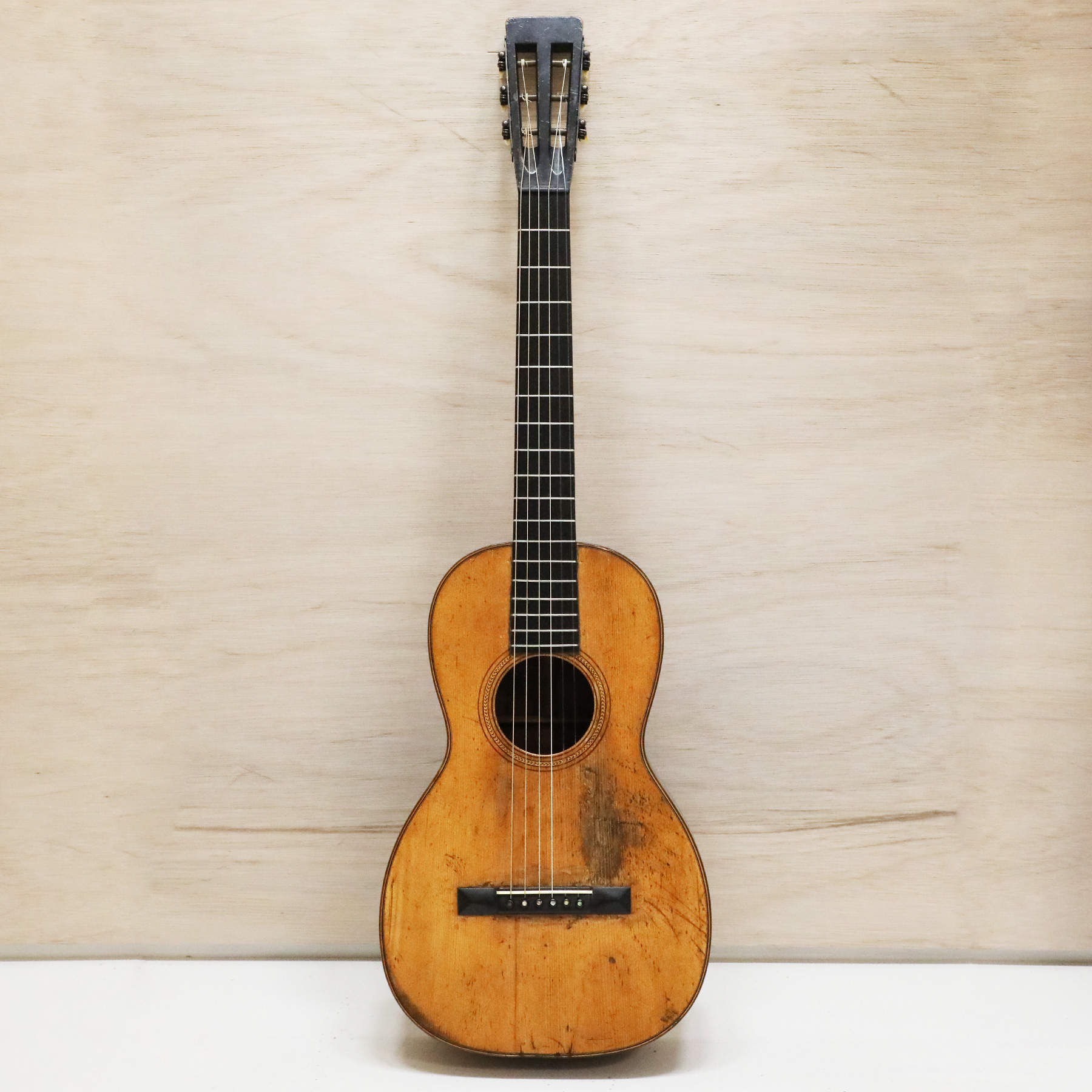
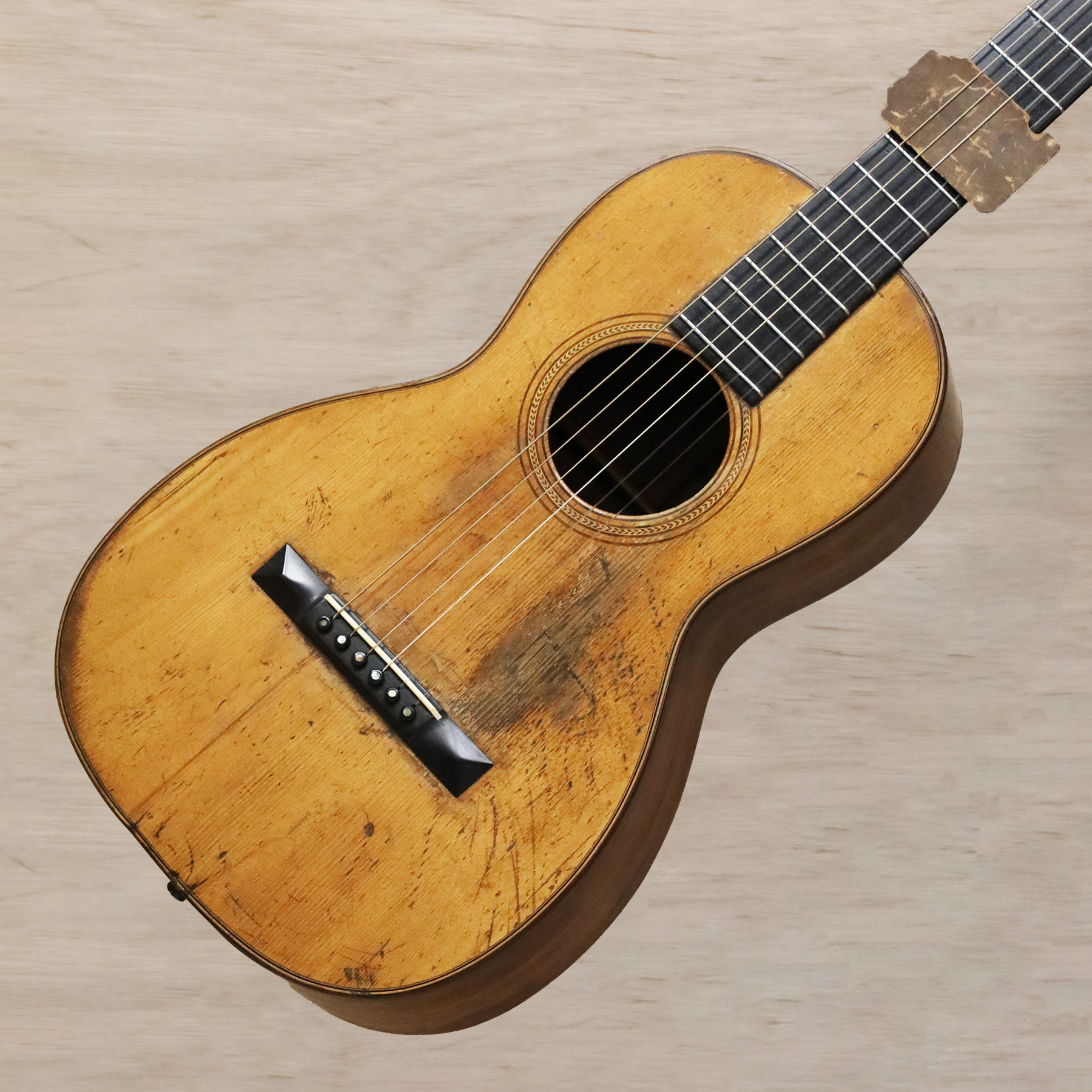
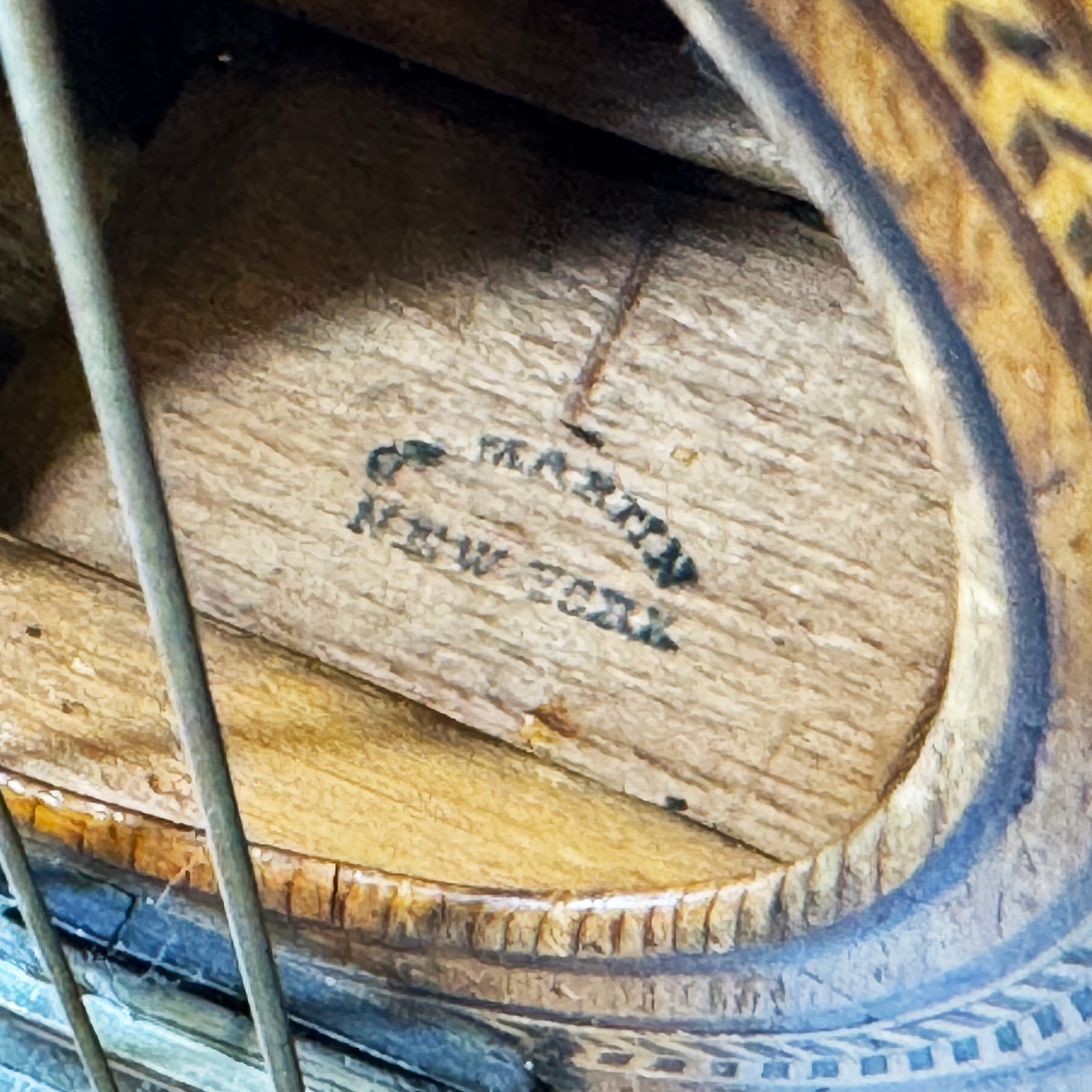
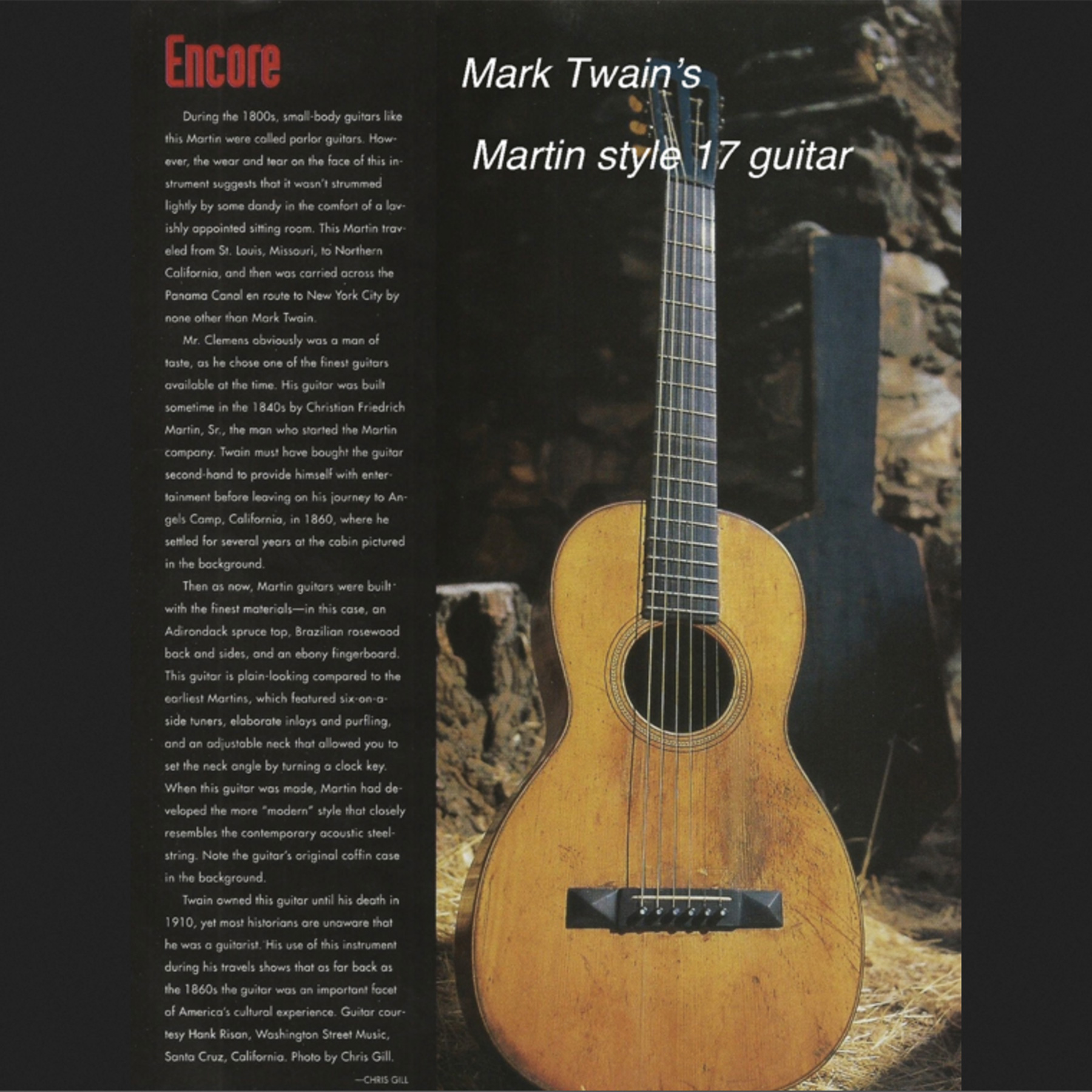
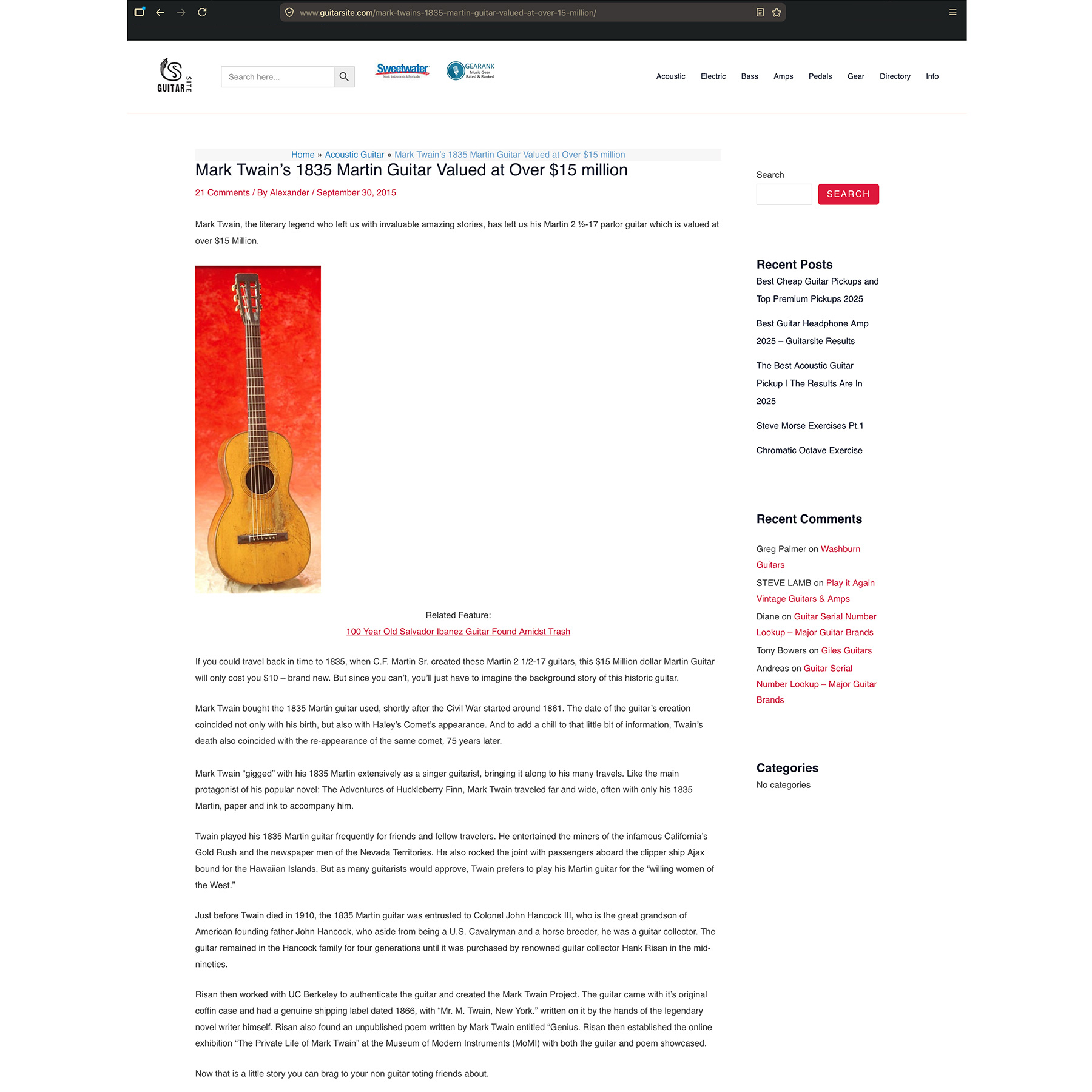
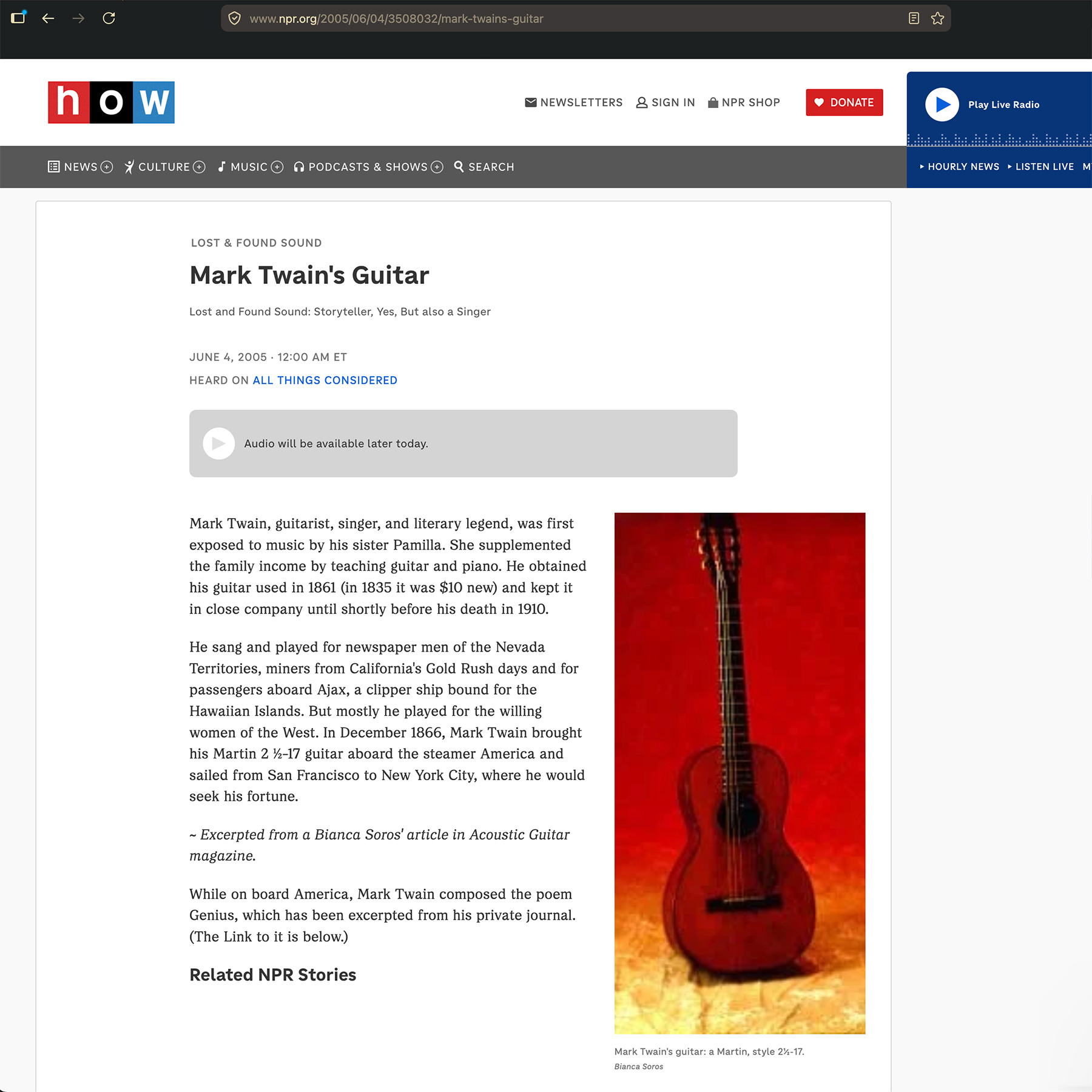
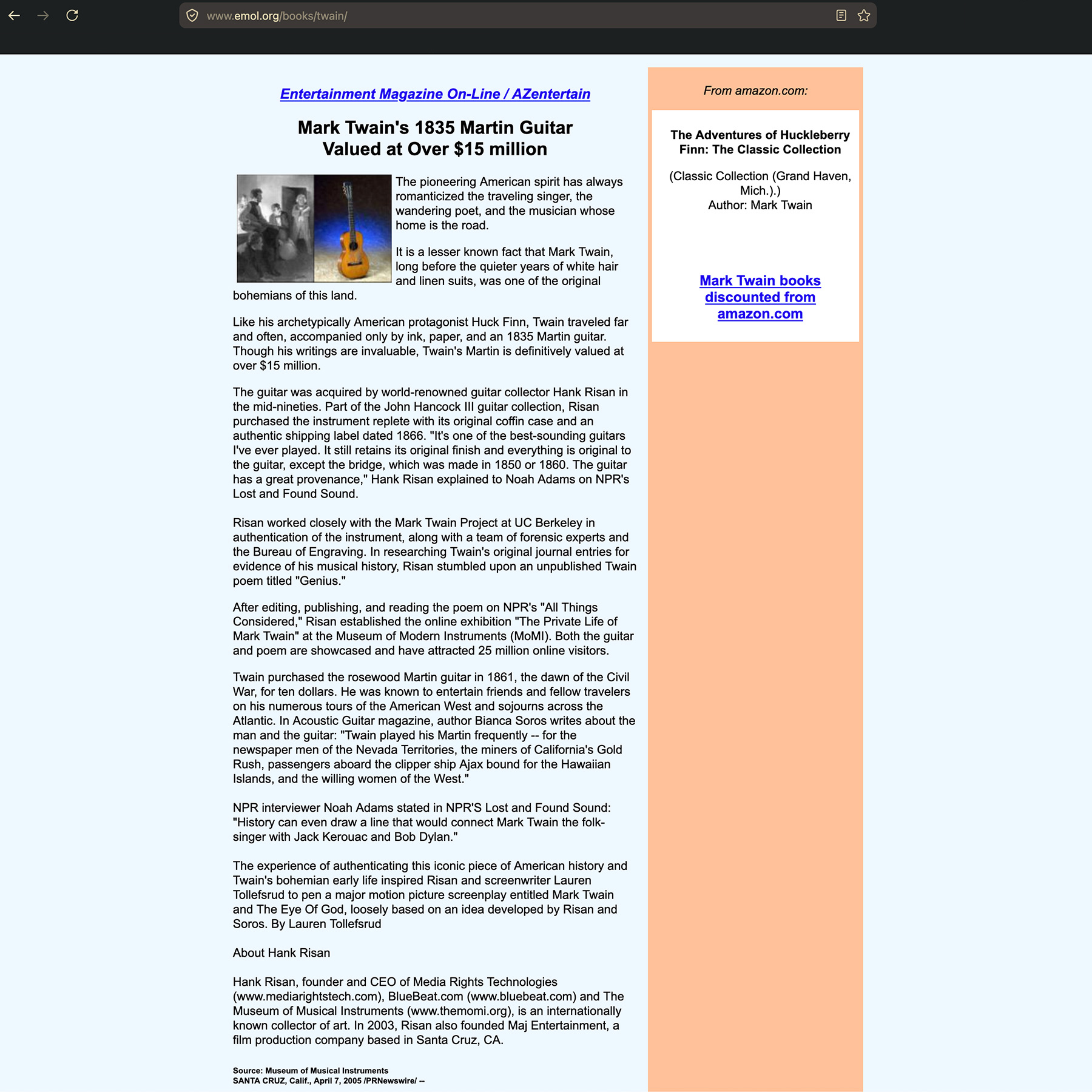

c. 1835 Martin Style 2 1/2-17 Parlor Acoustic Guitar Owned & Played by Mark Twain – Vintage Original 19th Century CF Martin New York w/ Original Coffin Case
Share this:

Few objects exist that can claim to have accompanied a literary genius on the road, consoled miners in the Sierra Nevada foothills, serenaded passengers on the wide Pacific, and quietly borne witness to the making of the American imagination. This is one of them.
Built by Christian Frederick Martin Sr. in 1835 — the very year of Samuel Langhorne Clemens’ birth — this Size 2½-17 parlor guitar in rosewood is among the earliest surviving examples of Martin craftsmanship, predating by decades the guitar forms that would define American folk and popular music. When it was new, it could be had for ten dollars. Today it is priceless. Its current appraised value of over fifteen million dollars reflects not merely its age and rarity, but the singular life it lived in the hands of one of the greatest writers the world has ever known.
“History can even draw a line that would connect Mark Twain the folk-singer with Jack Kerouac and Bob Dylan.” — Noah Adams, NPR
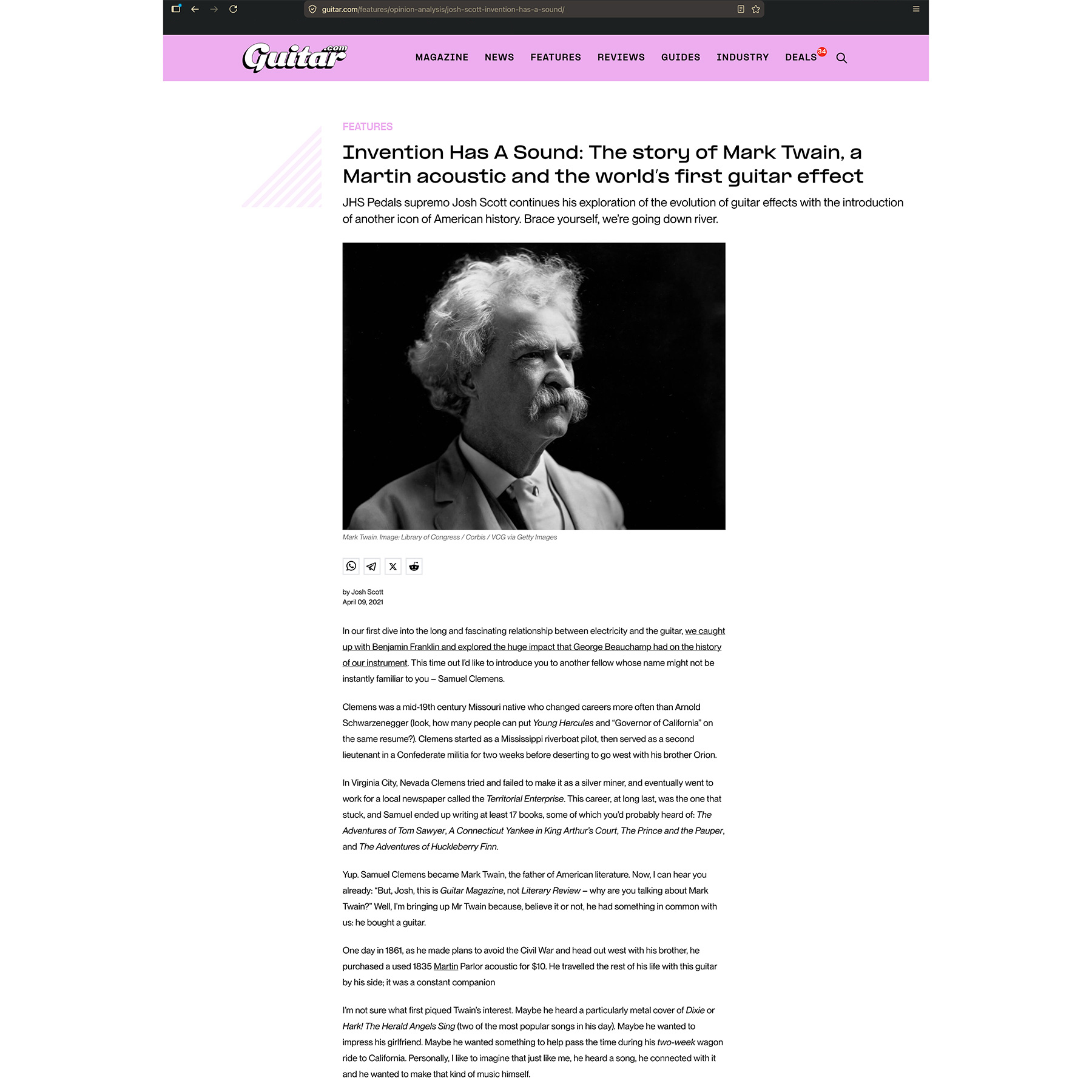
Mark Twain acquired this instrument in 1861, secondhand, at the dawn of the Civil War. He was not yet famous. He was a young man with restless feet, a journalist’s eye, and a musician’s soul — and this guitar became his constant companion through the years that would forge both the man and the myth.
Twain carried this Martin across the breadth of a young nation during the most electrifying decades of American expansion. He played it for the sunburned miners of California’s Gold Rush, who had left their homes and families behind for the promise of fortune in the hills. He played it for the newspaper men of the Nevada Territories, ink-stained and irreverent — his own tribe. He brought it aboard the clipper ship Ajax, bound for the Hawaiian Islands, filling the great salt air with music above the Pacific. And he sailed with it from San Francisco to New York City aboard the steamer America in December 1866, the guitar resting in its original coffin case while Twain composed the poem Genius in his private journal — a poem the world would not read for over a century.
These were not the parlor performances of a dilettante. This was music played by a man fully alive to his moment, in the company of adventurers, dreamers, and wanderers — the cast of characters who would one day fill the pages of his greatest works. Every chord Twain struck on this guitar resonates, however faintly, in the voice of Huck Finn drifting down the Mississippi.
Provenance
1835 – Guitar manufactured by C.F. Martin Sr. in New York; retailed new for $10.
1861 – Purchased secondhand by Samuel L. Clemens (Mark Twain) at the outset of the Civil War. Becomes his traveling companion through the American West and beyond.
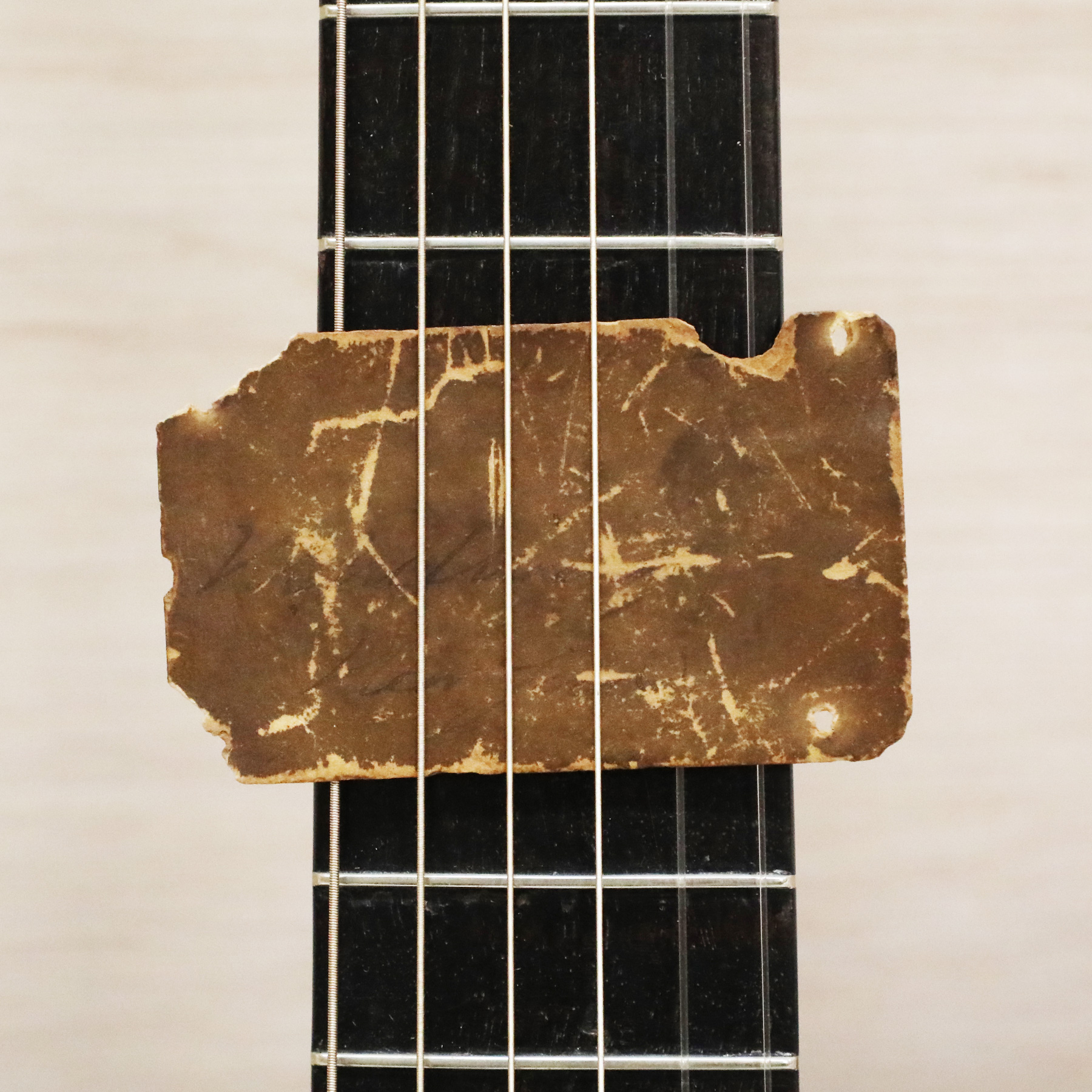
1866 – Twain addresses the original coffin case shipping label — “Mr. M. Twain, New York” — in his own hand. Label survives intact with the instrument.
1910 – Shortly before his death, Twain entrusts the guitar to Colonel John Hancock III — U.S. Cavalryman, horse breeder, guitar collector, and great-grandson of American founding father John Hancock. The instrument enters one of the great private collections of the era.
1910–1990s – The guitar remains in the Hancock family across four generations, privately held and carefully preserved.
Mid-1990s – Acquired by world-renowned guitar collector Hank Risan from the Hancock estate. Risan partners with the Mark Twain Project at UC Berkeley for rigorous authentication, enlisting a team of forensic experts and the Bureau of Engraving to verify the instrument, the case, and the handwriting on the shipping label.
Post-1995 – Risan uncovers the unpublished Twain poem Genius during archival research. He edits and publishes the poem, reading it on NPR’s All Things Considered. The guitar and poem are installed in the online exhibition “The Private Life of Mark Twain” at the Museum of Modern Instruments (MoMI), attracting 25 million visitors.
The guitar retains its original rosewood finish throughout — extraordinary for an instrument of this age and the active life it endured. The bridge, replaced sometime between 1850 and 1860, is the sole non-original component, and its own age now renders it a historical artifact in its own right. The original coffin case is present and intact, complete with its most extraordinary feature: a shipping label dated 1866, bearing the inscription “Mr. M. Twain, New York,” written in Twain’s own hand.
Authentication was conducted in partnership with the Mark Twain Project at UC Berkeley — the preeminent scholarly institution for Twain studies — alongside forensic document experts and the Bureau of Engraving. Hank Risan, one of the world’s foremost guitar collectors, has described it as “one of the best-sounding guitars I’ve ever played,” noting that it retains “a great provenance” that is essentially unimpeachable.
This lot comprises the 1835 C.F. Martin Size 2½-17 rosewood parlor guitar in original finish and the original coffin case bearing Mark Twain’s handwritten 1866 shipping label; discovered by Hank Risan and published for the first time in the modern era. Together these objects form an indivisible monument to the life and creative spirit of America’s greatest literary voice.
To acquire this guitar is to acquire a piece of the American story itself — a story told in rosewood and ink, in mining camps and on open water, in the restless motion of a man who became a nation’s conscience. There will never be another.
If you have something like this, and you’re interested in finding out more or potentially selling yours, please click here.
