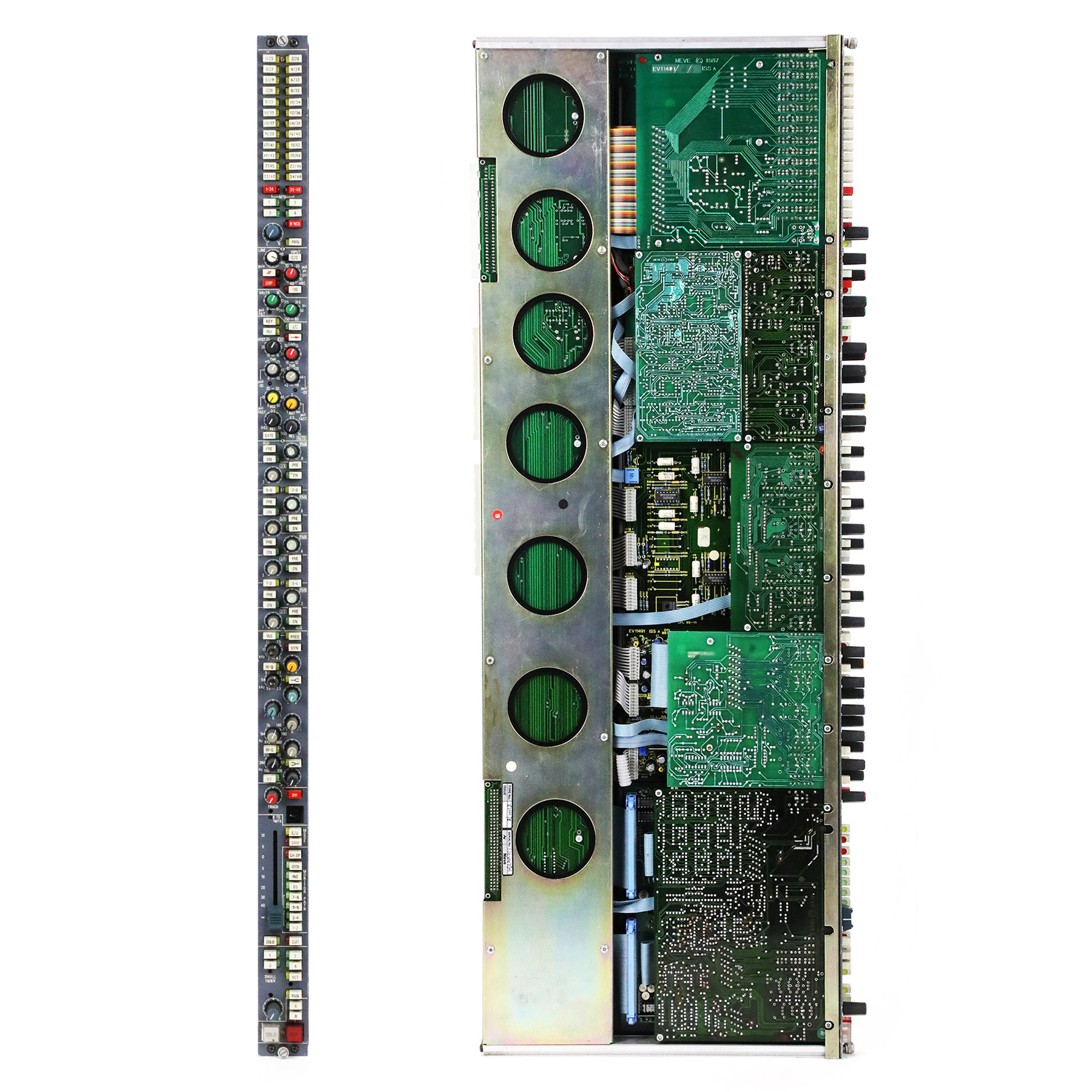
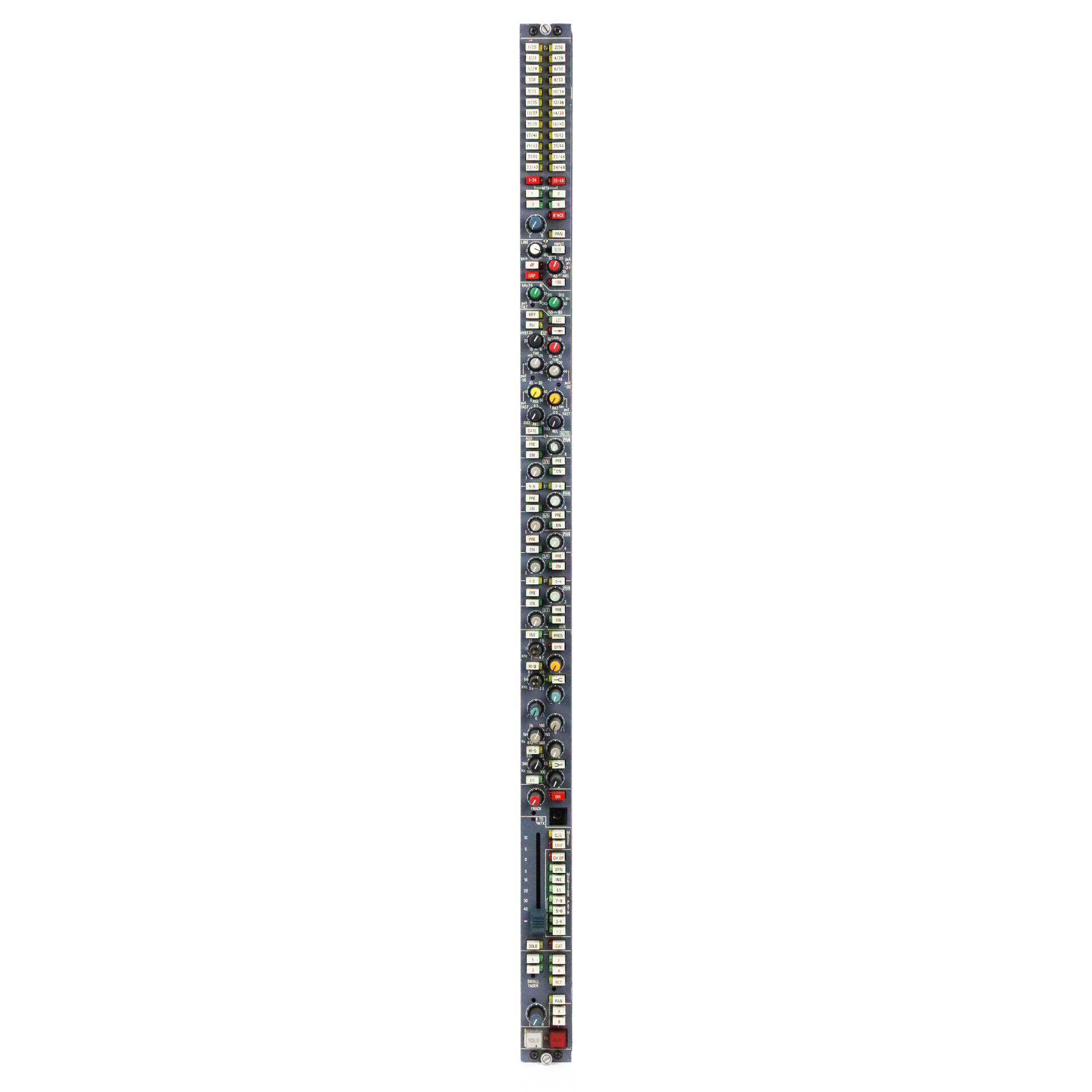
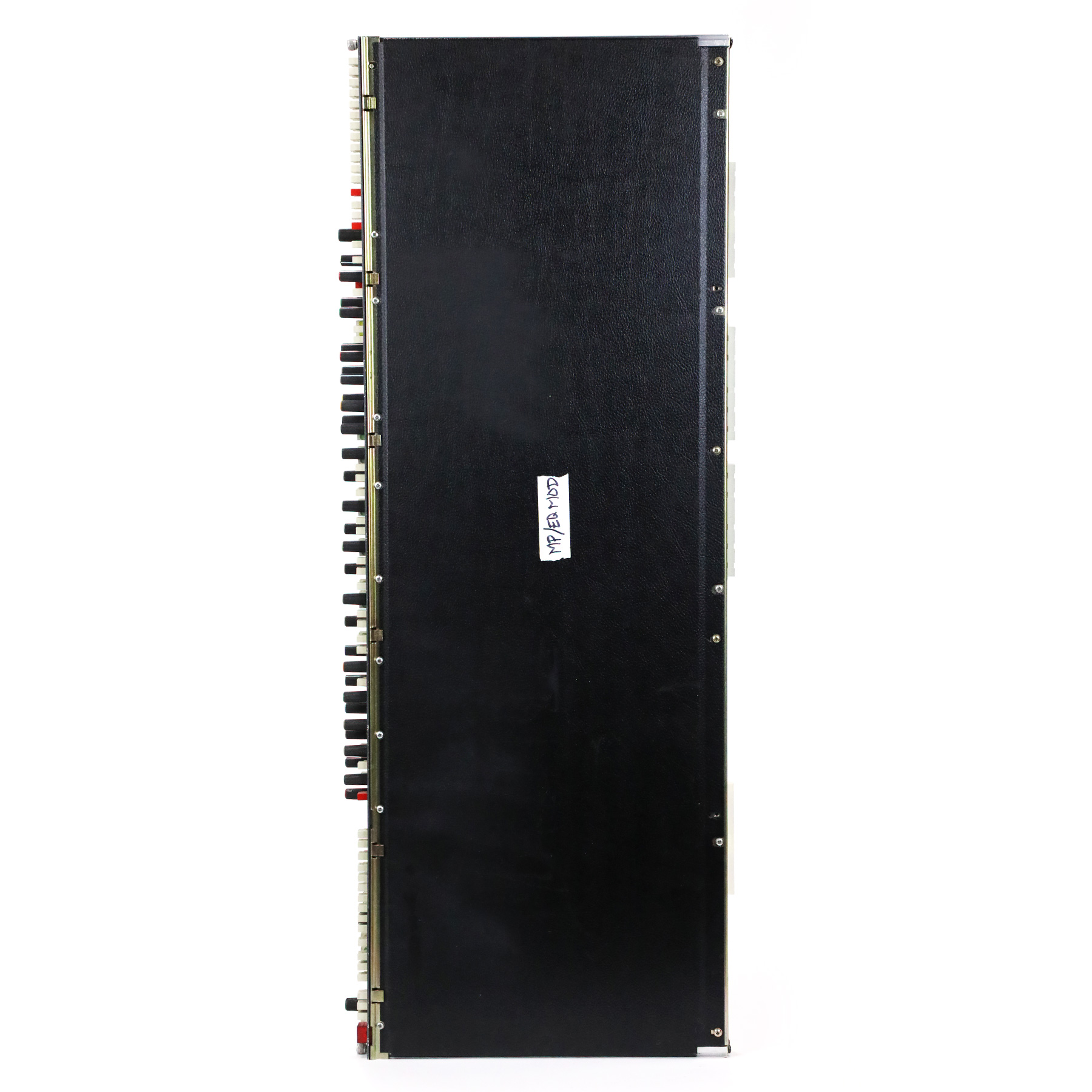
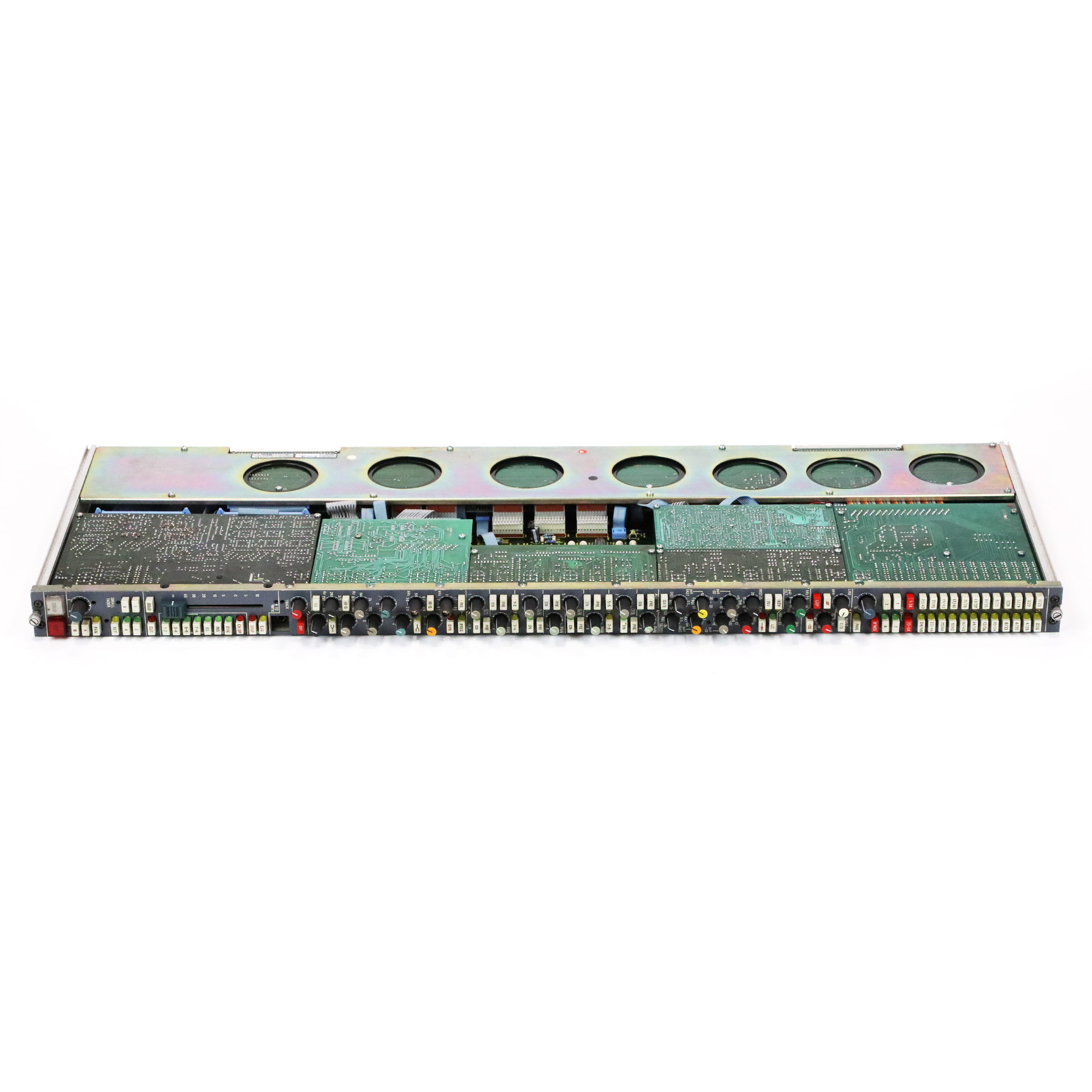
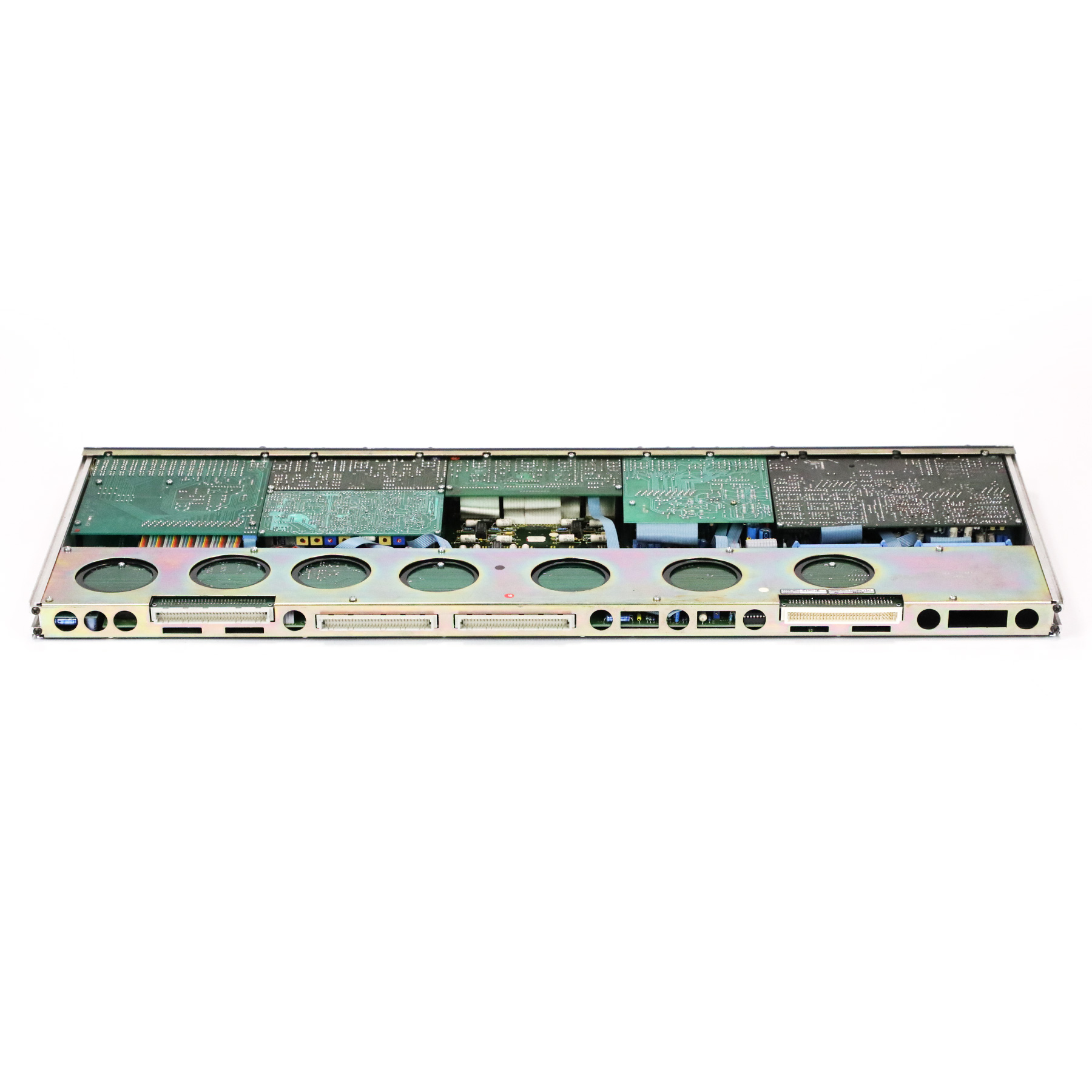
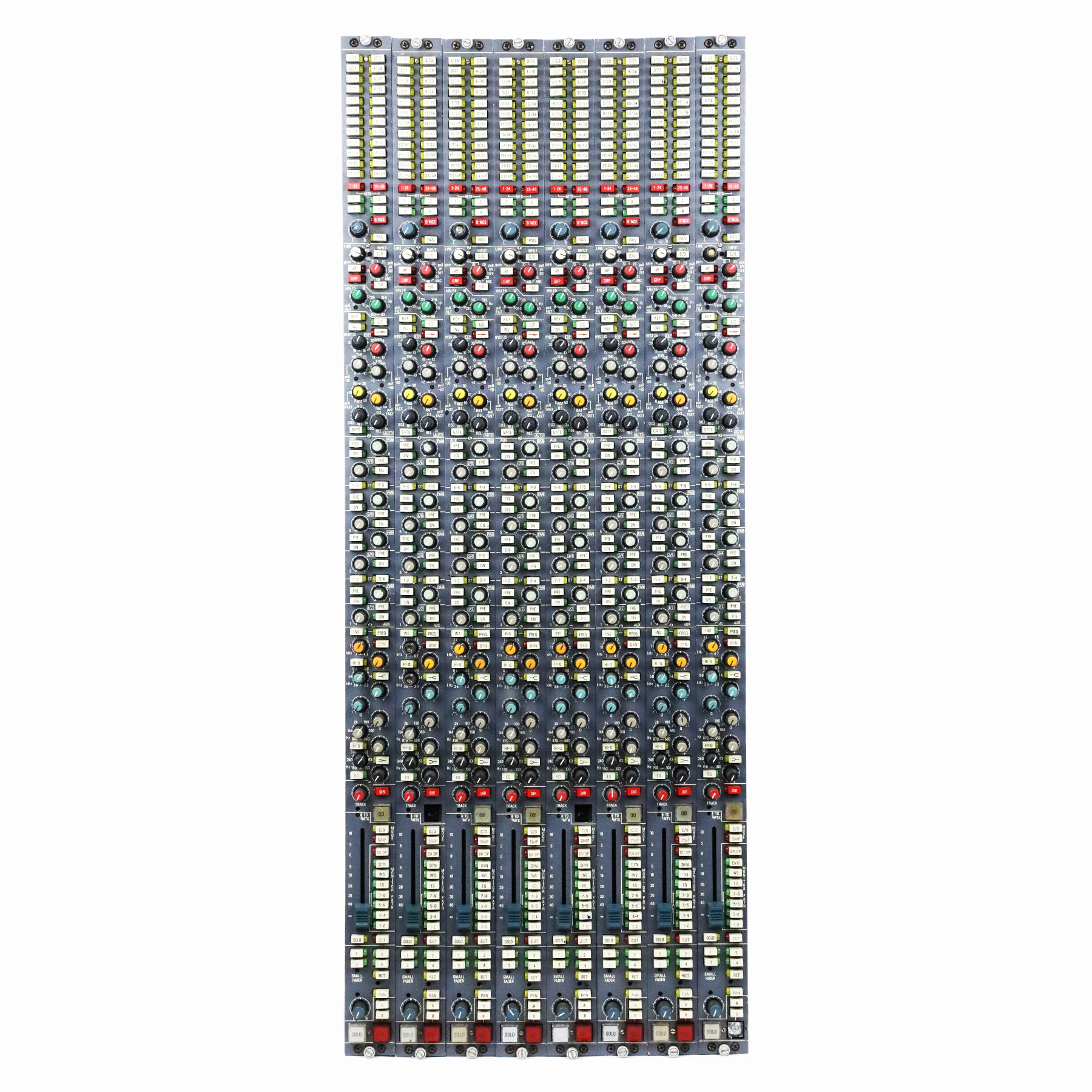
1987 AMS Neve V Series VR Console Channel Strip – Vintage Original ’87 Recording Console Mic Preamp Single Type 87000/B Module (20447/K)
Share this:

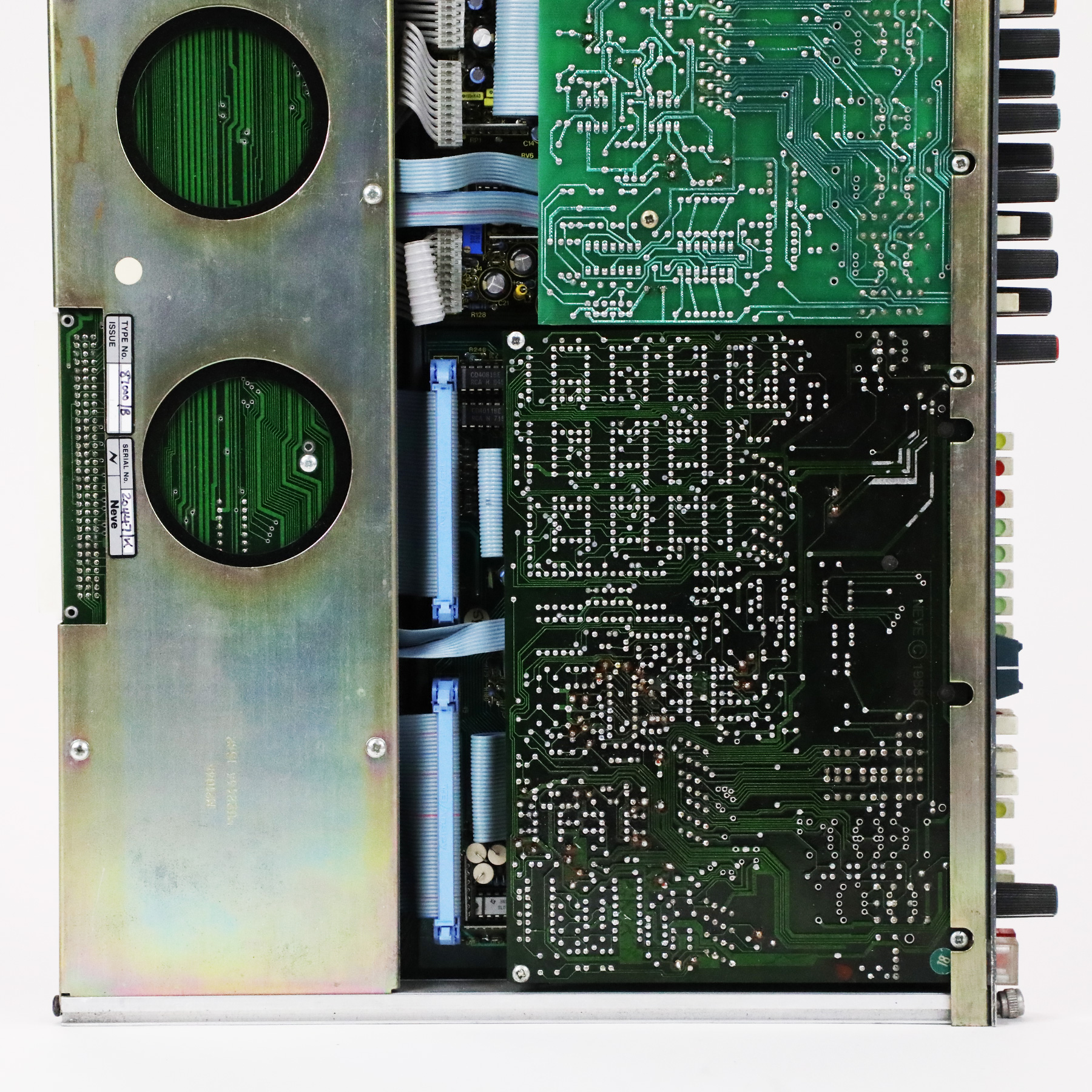
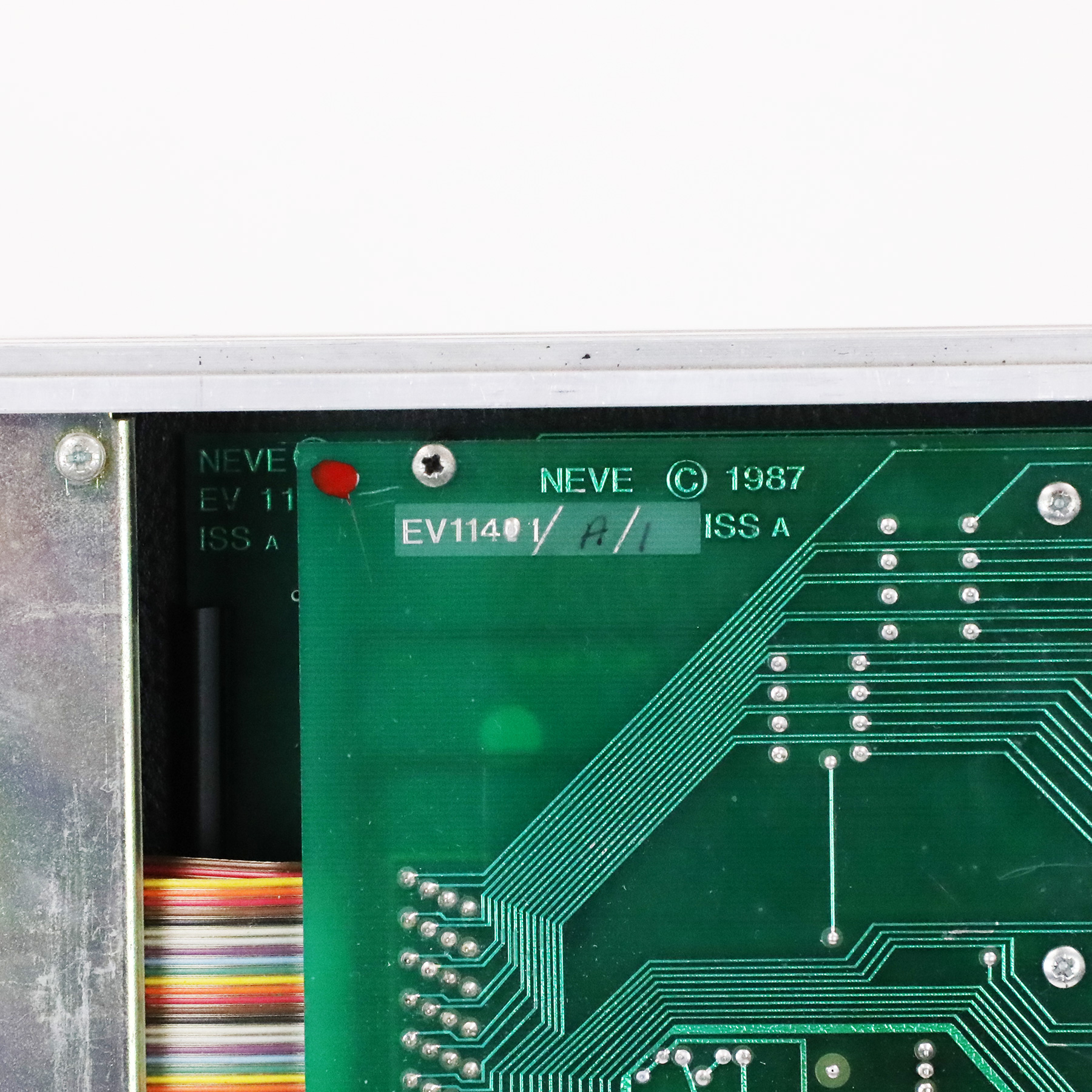
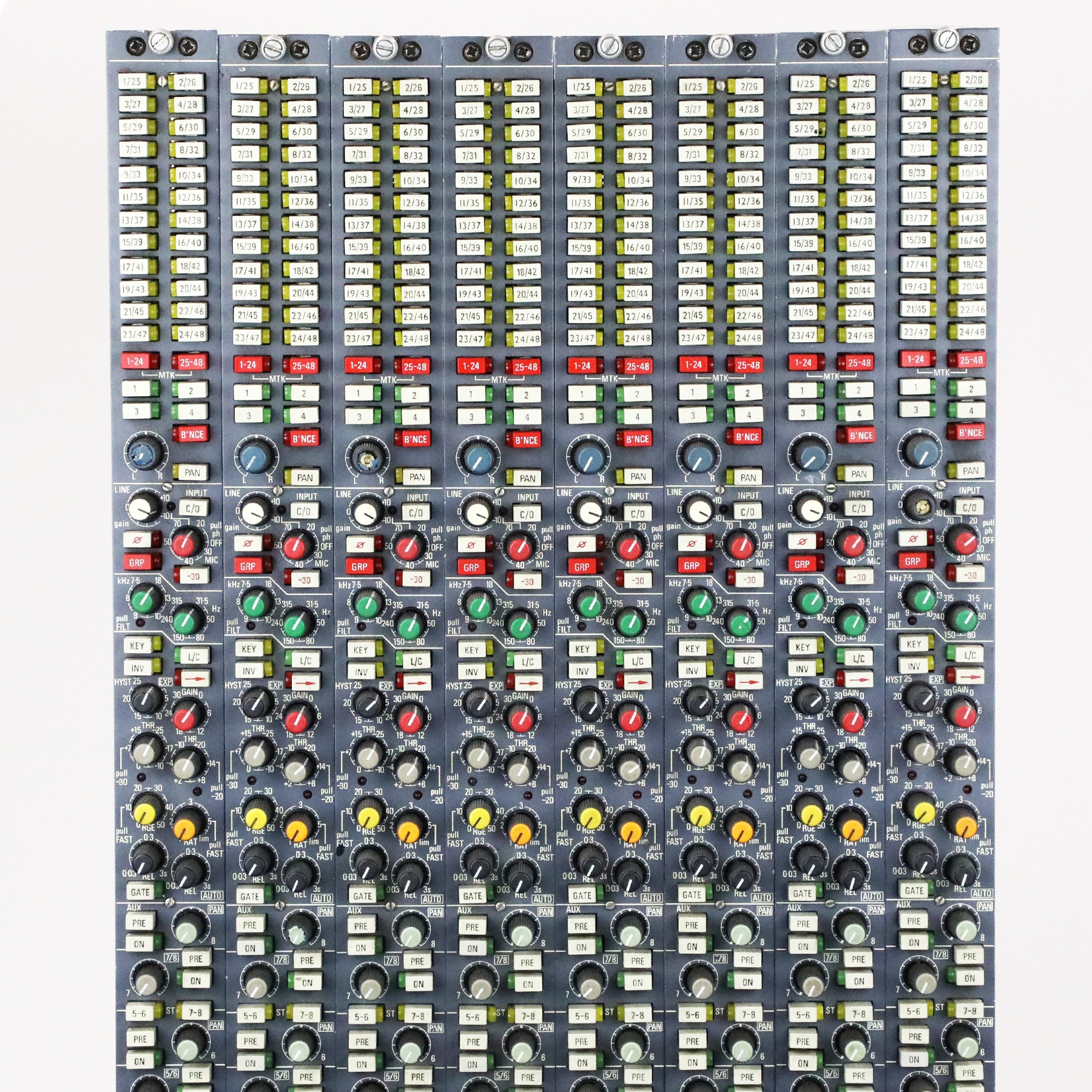
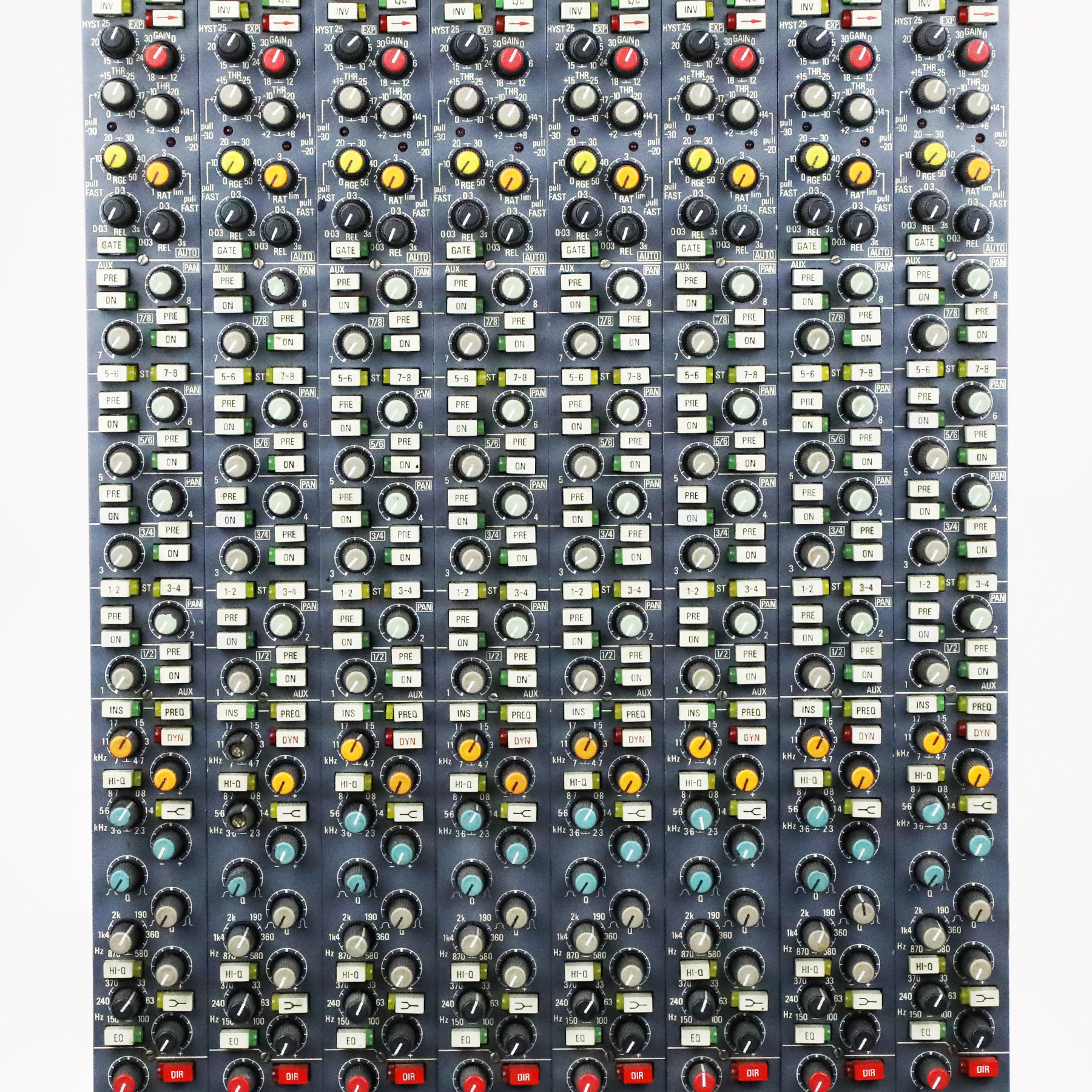
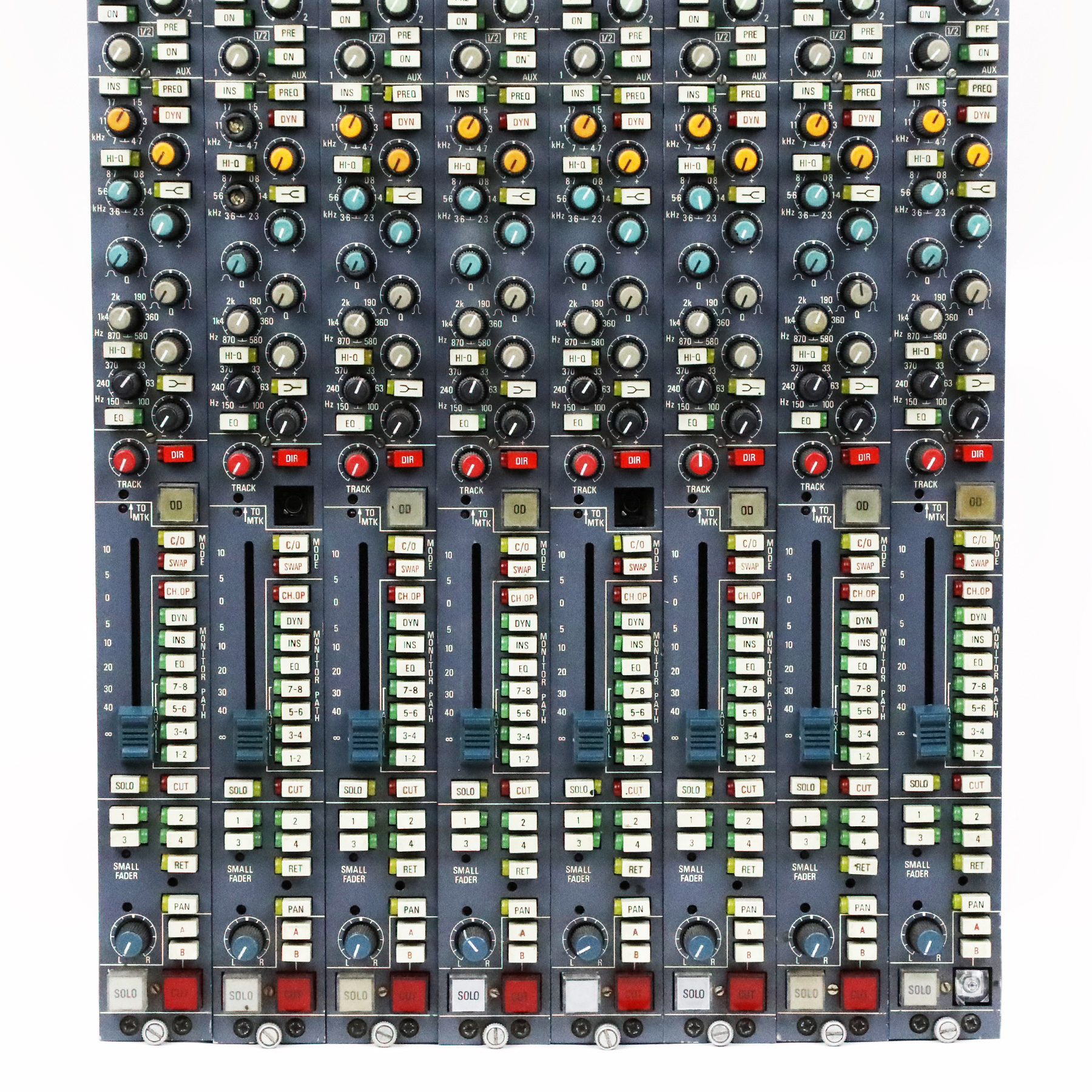
– For your consideration is vintage 1987 AMS Neve VR recording console channel strip.
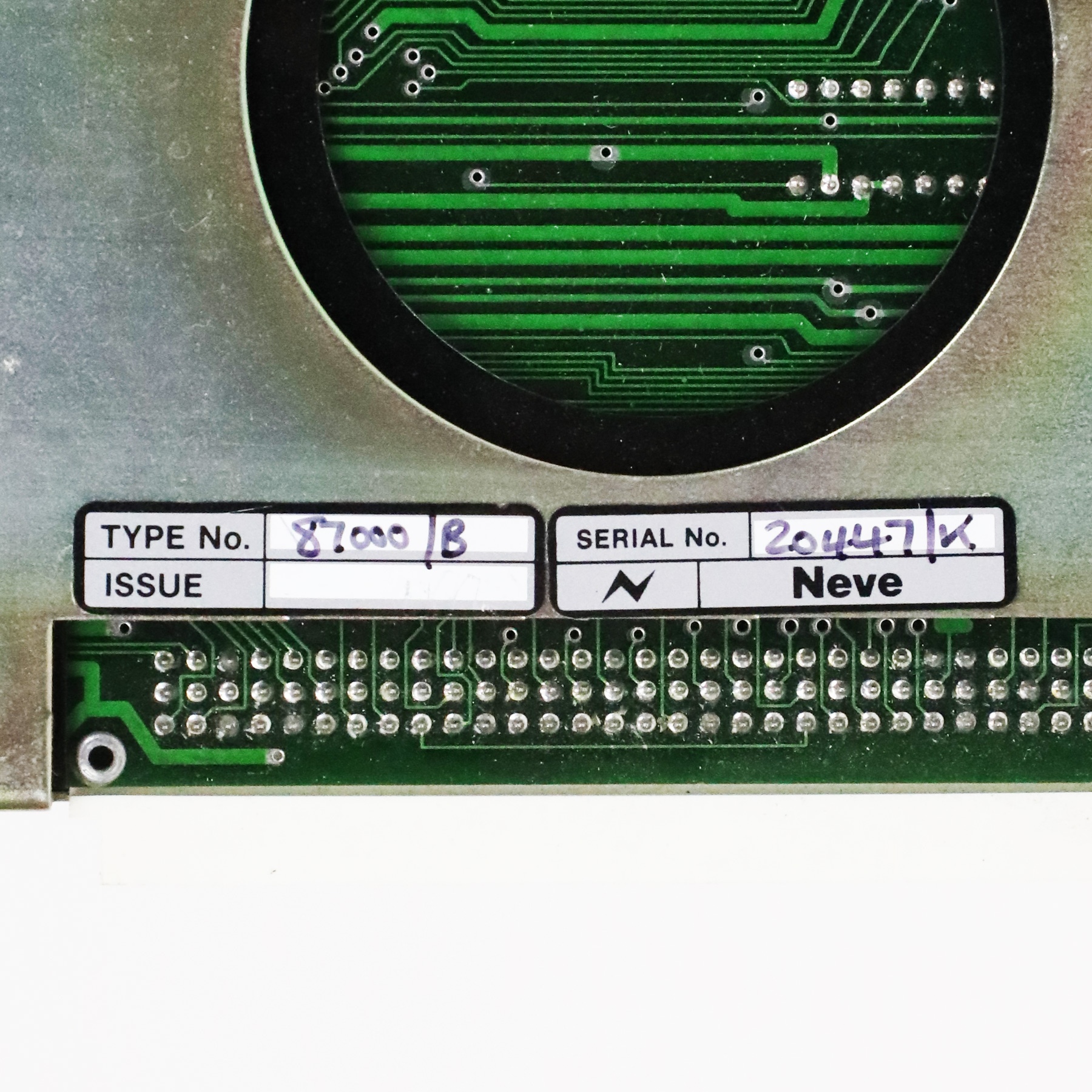
– This very nice 100% all original example, serial number 20447/K, was decommissioned from a fully functional 64-channel console with flying faders.
– This is 1 of 8 modules we currently have listed. Please inquire regarding a package deal discount for orders of 2 or more.
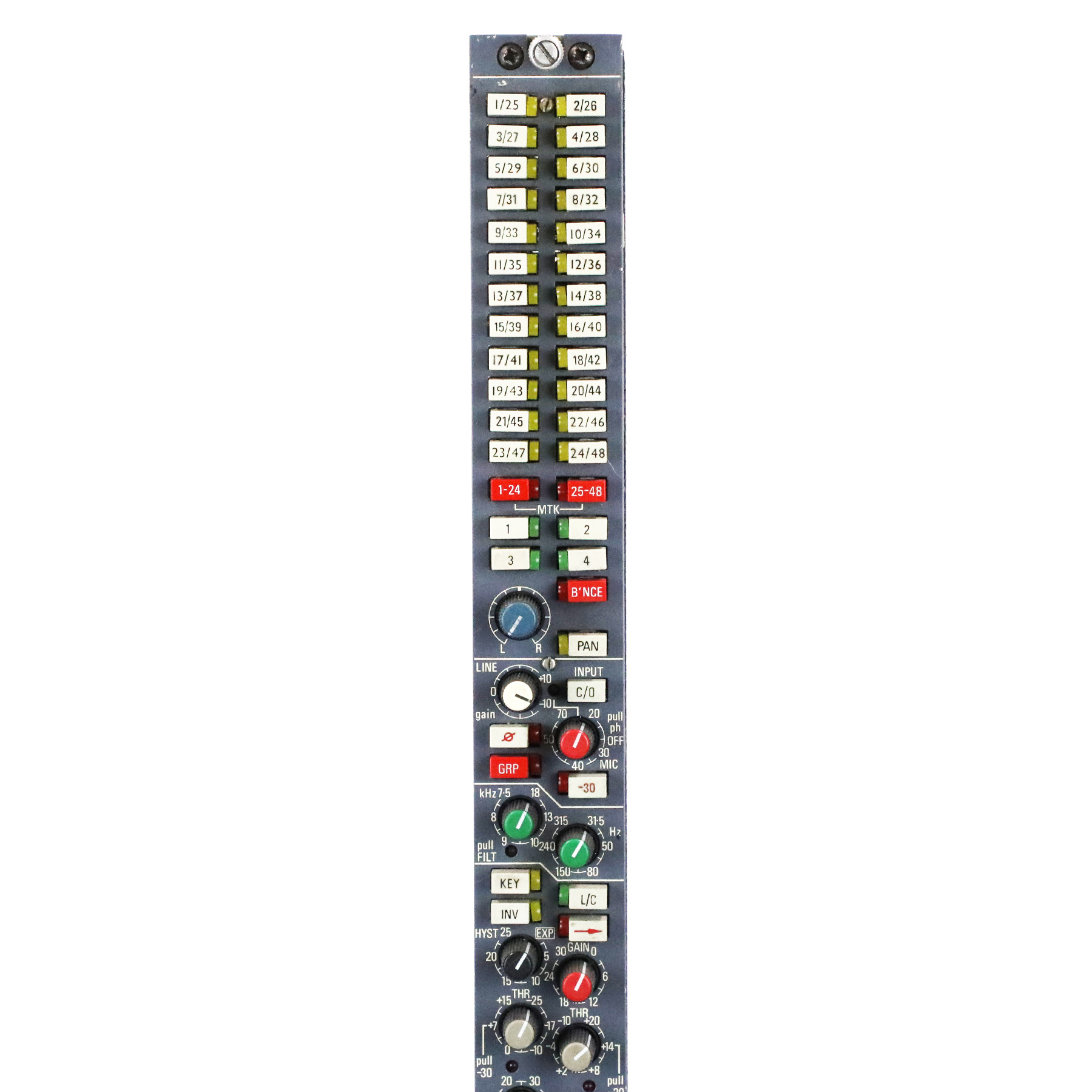
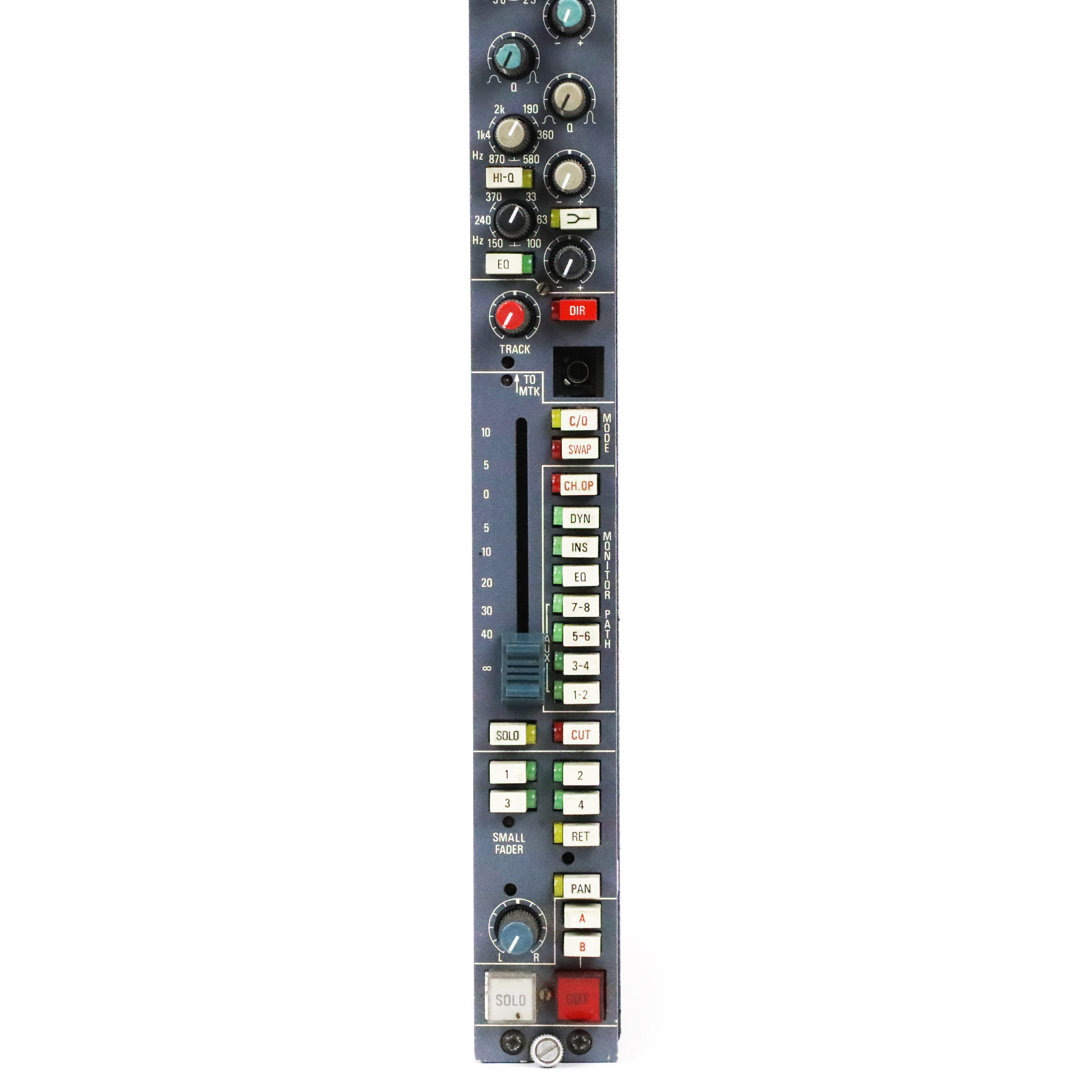
– 1. Input and Preamp Section: The input stage captures and levels signals for the rest of the strip. Mic and Line Selection: A Change-Over (C/O) button alternates between microphone and line inputs. Gain Controls: Includes a mic gain control (typically +20 to +70 dB) and a dedicated line gain/trim control (±10 dB). Phantom Power: +48V phantom power is switchable, often activated by pushing/pulling the mic gain pot. Phase Reverse: A button to reverse the polarity of the incoming signal. Pad: A switchable -30 dB pad for high-level microphone signals. Group Input: Allows the module to take input from an associated group bus without external patching.
– 2. Filter Section: Two-pole filters (12 dB per octave) used for cleaning up the top and bottom of the frequency spectrum. High-Pass Filter (HPF): Sweepable from 31.5 Hz to 315 Hz. Low-Pass Filter (LPF): Sweepable from 7.5 kHz to 18 kHz. Activation: Filters are typically engaged by pulling the respective pot.
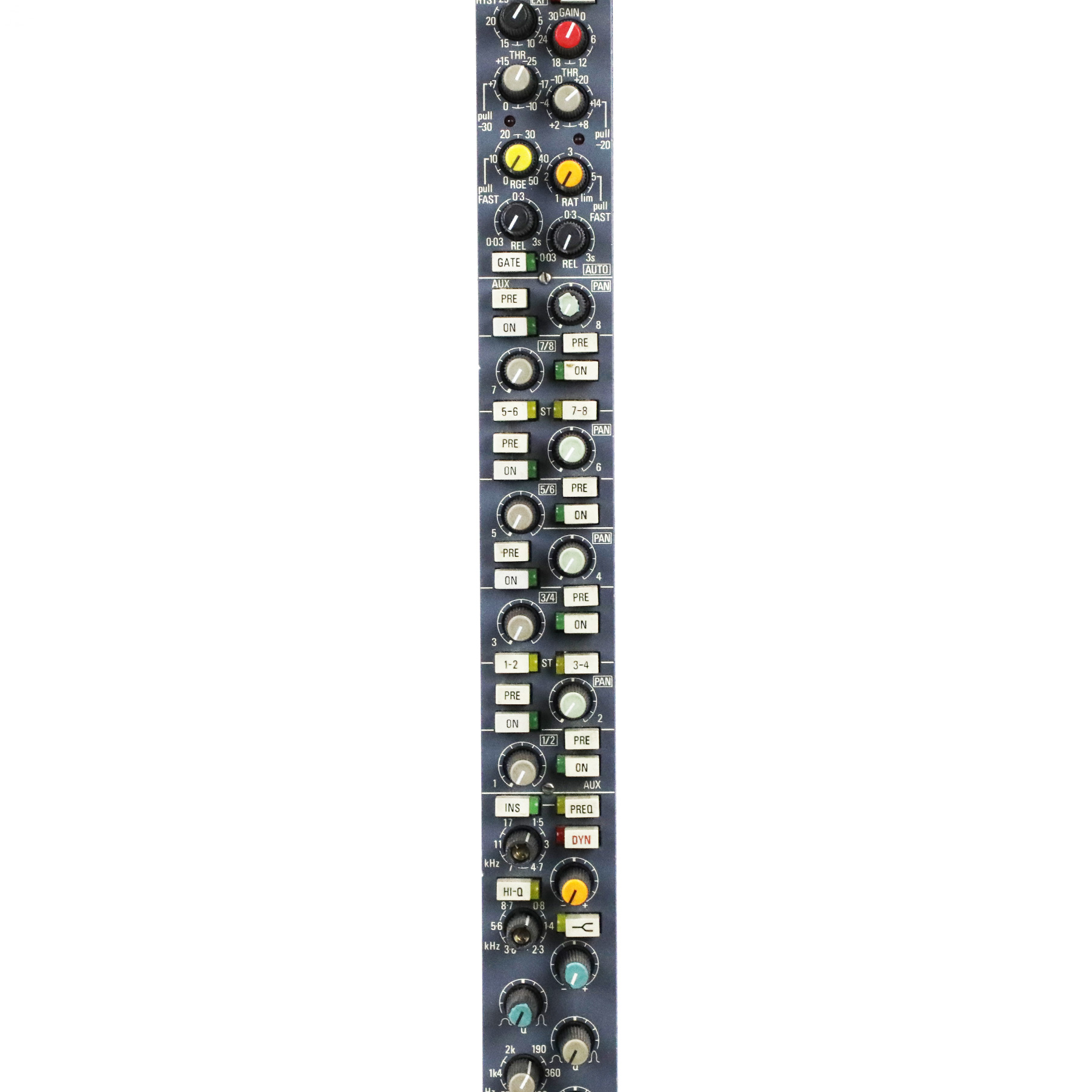
– 3. Dynamics Section: This section includes a compressor/limiter and an expander/gate that can be linked or used independently. Limiter/Compressor: Rotary controls for Threshold (+20 to -30 dB), Ratio (1:1 to limiter), and Release (30 ms to 3 seconds). Make-up Gain: Up to 30 dB of gain at the compressor output. Fast Attack: Activated by pulling the ratio pot (changes from 1 ms to 100 µs). Expander/Gate: Threshold (-55 to +15 dB), Range (0 to -50 dB), and Release (30 ms to 3 seconds). Hysteresis: A unique control to set different opening and closing thresholds for more precise triggering. Ducking (INV): Inverts the trigger so the gate closes when a signal is present. Key Input: Allows the gate or compressor to be triggered by an external sidechain signal.
– 4. Equalizer Section: A four-band parametric EQ designed for detailed tonal shaping. High and Low Bands: Semi-parametric or shelving with ±18 dB gain. High-Q switch narrows the bandwidth. Hi EQ: 1.5 kHz to 17 kHz. Lo EQ: 33 Hz to 370 Hz. Mid Bands: Fully parametric with ±18 dB gain and variable Q (0.5 to 9). Hi-Mid: 800 Hz to 8.7 kHz. Lo-Mid: 190 Hz to 2 kHz. Sidechain Assign (DYN): Assigns the EQ to the dynamics section for specialized processing like de-essing.
– Routing and Fader Sections: Controls the signal flow to buses, monitors, and the main mix. Dual Faders: Features a Large Fader (often for main mix) and a Small Fader (monitor path) with a Fader Swap function to exchange their roles. Routing Matrixes: Large Routing Matrix (LRM): Assigns signals to 48 group buses and 4 stereo buses. Small Routing Matrix (SRM): Assigns monitor signals to stereo buses. Auxiliary Sends: 8 mono aux buses that can be paired for 4 stereo sends. Insert Points: Switchable insert send and return for external processing; can be placed Pre-EQ or Post-EQ. Direct Out (DIR): Assigns the channel path directly to a multitrack send, bypassing the group bus.
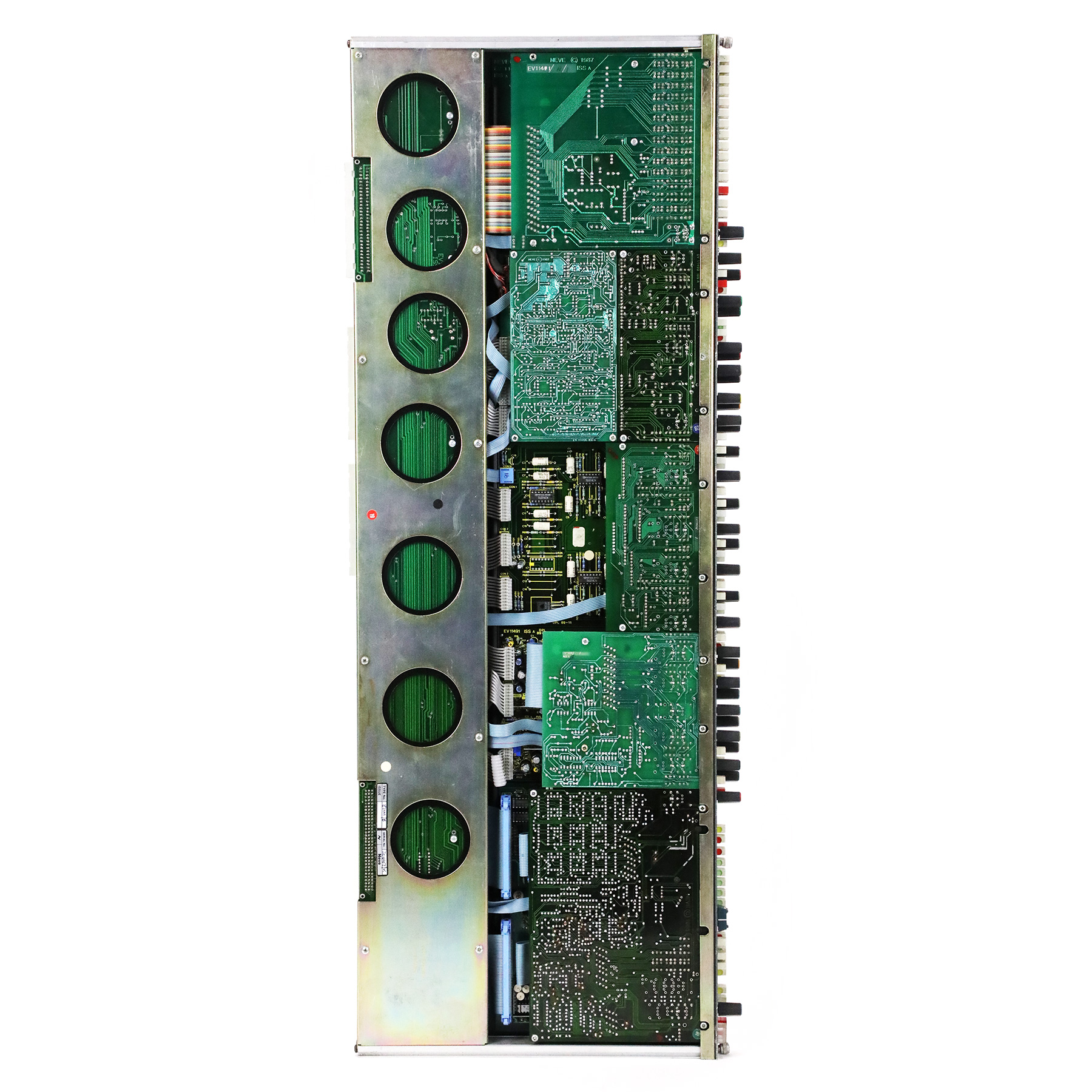
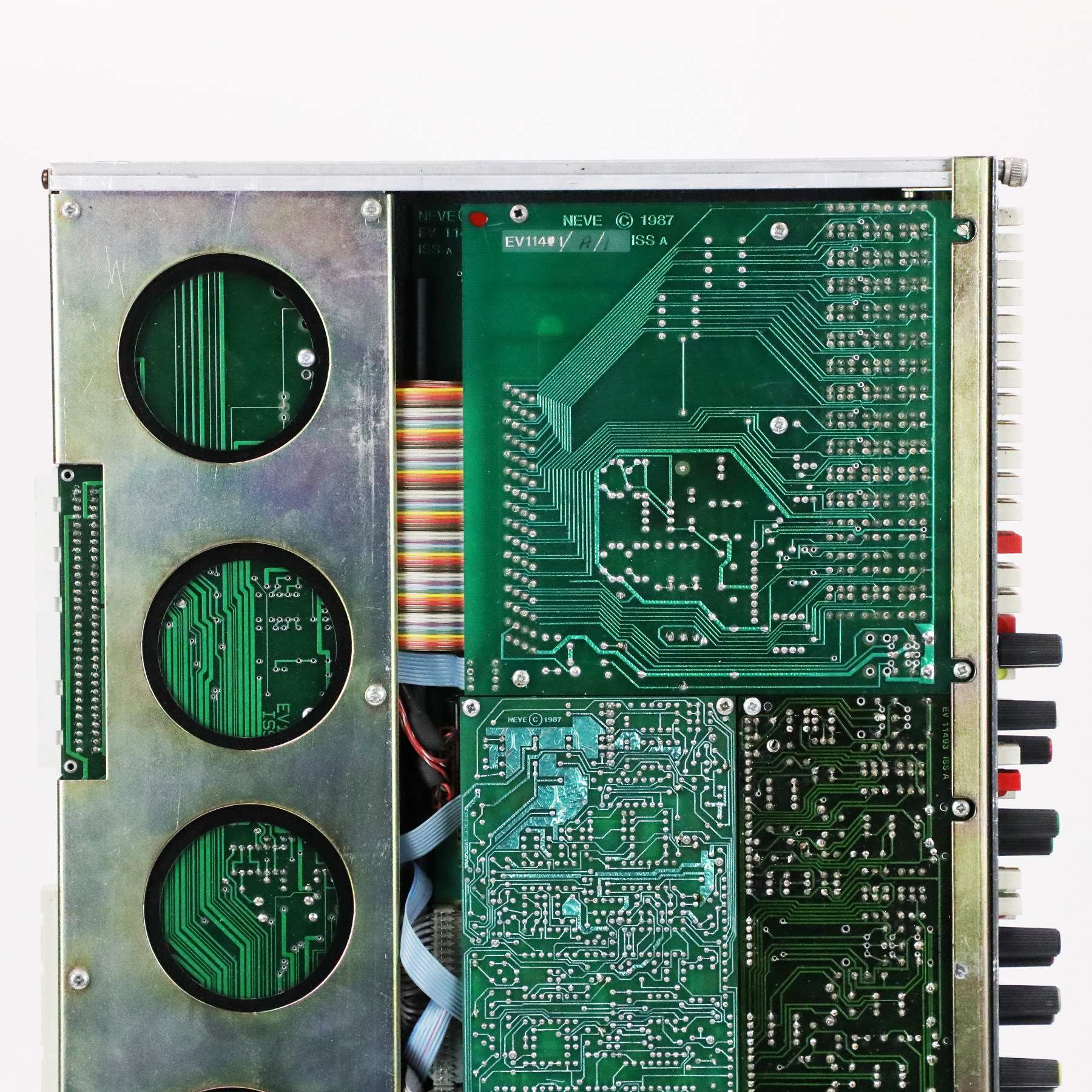
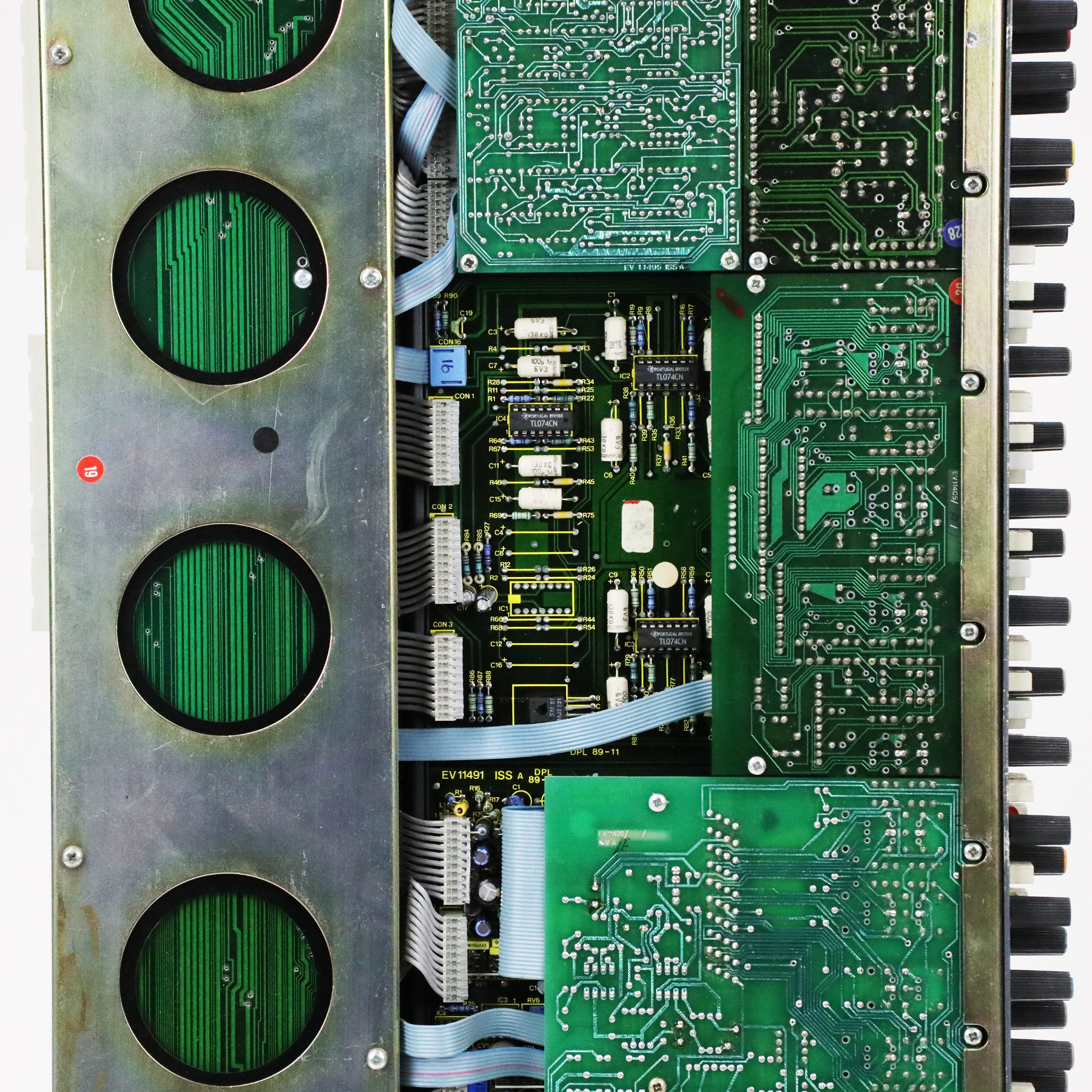
– Please inspect all photos closely for any missing knobs or buttons, as this is sold as pictured.
– Please scroll through the entire gallery to view the 19 images available. All photos are of the actual strip.
– Worldwide shipping available: please inquire for an accurate quote. International buyers please send an email prior to purchase.
– All purchases made through our site include both tax (ALL taxes included) and free domestic shipping!
If you have something like this, and you’re interested in finding out more or potentially selling yours, please click here.
